

The Fusion of Traditional Bladesmithing and Holographic Technology in Modern Katana Design
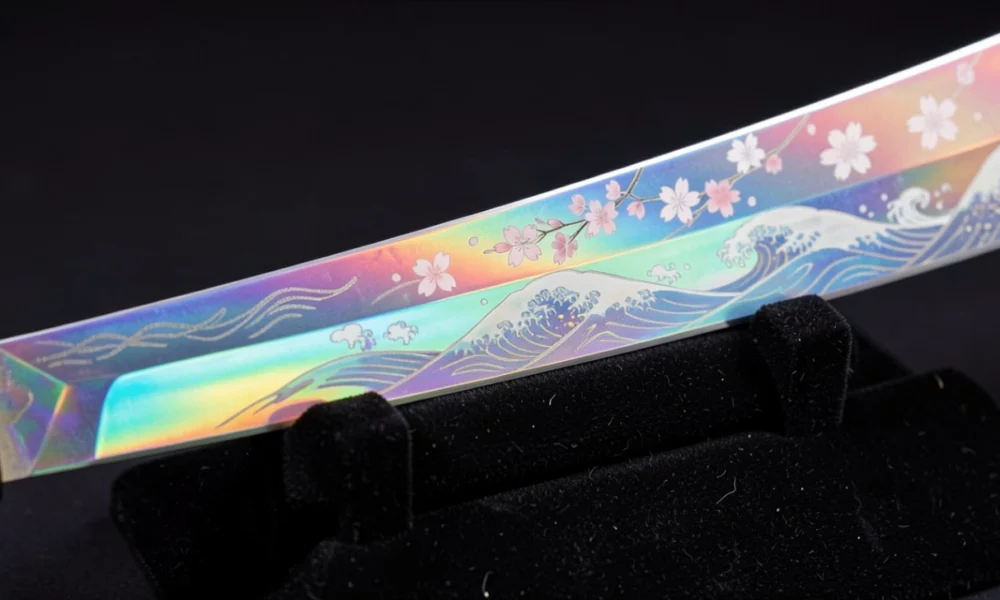
The intersection of traditional craftsmanship and advanced technology has produced notable innovations in various fields. In sword making, one such development involves the integration of holographic elements into katana design. This combination of classical bladesmithing techniques with modern optical technology has resulted in swords that serve both aesthetic and functional purposes.
Table Of Content
- The Concept of Holographic Katanas
- The Art of Holographic Blade Design
- Technical Process of Holographic Integration
- Practical Applications Beyond Aesthetics
- Training and Educational Uses
- Authentication and Documentation
- Performance Optimization
- Historical Context and Development Timeline
- Collectibility and Market Position
- Preservation and Maintenance Considerations
- The Future of Holographic Sword Technology
- Conclusion
The Concept of Holographic Katanas
Holography refers to a photographic technique that records light scattered from an object and presents it as a three-dimensional image. When applied to katana manufacturing, this technology creates visual effects on the blade and handle that change based on viewing angle and lighting conditions.
The application of holographic elements to katanas involves embedding microscopic patterns onto the sword’s surface. These patterns interact with light to produce shifting colors and designs. Manufacturers can program these holographic displays to show traditional Japanese motifs, such as cherry blossoms or wave patterns, as well as contemporary abstract designs.
The optical layering technique used in holographic katanas does not compromise the structural integrity of the blade. The holographic elements exist as surface-level modifications, leaving the core steel composition unchanged. This allows the sword to maintain its functional properties while gaining enhanced visual characteristics.
The Art of Holographic Blade Design
Modern holographic katanas display visual complexity that distinguishes them from traditionally finished swords. The holographic patterns create depth and movement, with colors shifting across the spectrum as light angles change.
Designers working with holographic katanas have several creative options:
- Full blade coverage: Holographic patterns applied across the entire blade surface create uniform visual effects
- Selective application: Patterns limited to specific sections, such as the hamon (temper line) or the area near the tsuba (hand guard)
- Layered imagery: Multiple holographic images visible from different viewing angles
- Custom motifs: Personalized designs, family crests, or specific cultural symbols rendered in holographic form
The precision required for holographic applications demands specialized equipment and expertise. Unlike traditional engraving or etching, holographic patterns must be calculated and applied with microscopic accuracy to achieve the desired light diffraction properties.
Technical Process of Holographic Integration
The creation of holographic katanas follows a multi-stage process that begins with traditional sword forging and concludes with optical enhancement.
Stage 1: Traditional Forging Master smiths first create the blade using conventional methods, including folding steel, clay tempering, and differential hardening. This produces a functional katana with proper weight distribution, balance, and edge geometry.
Stage 2: Surface Preparation The finished blade undergoes surface preparation to accept holographic treatments. This requires polishing to specific finishes that optimize light reflection and pattern visibility.
Stage 3: Holographic Application Using laser interference lithography or similar technologies, technicians apply holographic patterns to the prepared surface. This process creates microscopic ridges and grooves that diffract light.
Stage 4: Protective Coating A transparent protective layer seals the holographic elements, preventing wear during handling and cleaning while maintaining optical clarity.
Practical Applications Beyond Aesthetics
Holographic technology on katanas offers functional benefits beyond visual appeal. Several practical applications have emerged as the technology has matured.
Training and Educational Uses
Martial arts practitioners can benefit from holographic markers placed at specific positions on the blade. These visual indicators show optimal grip placement, hand positioning during techniques, and striking angles. Some systems incorporate sensors that detect blade movement and project real-time feedback through holographic displays, showing force distribution and impact angles during practice sessions.
Authentication and Documentation
Holographic elements serve as tamper-evident features for authenticating handmade katanas. Manufacturers can embed microscopic identification patterns that verify origin, production date, and smith attribution. These authentication markers are practically impossible to replicate without access to the original holographic programming equipment.
Performance Optimization
Research into blade dynamics has explored how holographic surface treatments affect cutting performance. The microscopic patterns created during holographic application can theoretically reduce air resistance and minimize drag during cutting motions. Some manufacturers claim these surface modifications improve cutting efficiency, though independent verification of these performance claims remains limited.
Historical Context and Development Timeline
The concept of holographic swords emerged in popular culture during the 1990s through science fiction media. Actual development of practical holographic applications to physical blades began in the early 2000s as holographic technology advanced beyond experimental stages.
Early attempts at creating holographic katanas faced significant challenges:
| Challenge | Resolution |
|---|---|
| Pattern durability on curved surfaces | Development of flexible holographic films and direct application techniques |
| Interference with blade geometry | Surface-level treatments that preserve original blade dimensions |
| Pattern visibility in varied lighting | Improved diffraction materials with broader light response ranges |
| Cost of production | Automated application systemare s reducing manual labor requirements |
The technology continues to evolve, with current research focusing on programmable holographic elements that could change patterns on demand.
Collectibility and Market Position
Holographic katanas occupy a specific niche within the broader sword-collecting community. Traditional collectors often prioritize historical authenticity and handmade craftsmanship, viewing holographic additions as departures from classical sword making. However, a separate market has developed among collectors interested in technological innovation and contemporary design.
Factors influencing holographic katana value include:
- Quality of the underlying traditionally forged blade
- Complexity and precision of holographic application
- Reputation of the smith and holographic technician
- Rarity of the specific holographic design
- Documentation and authentication of the piece
Limited edition holographic katanas from established makers have appeared at specialty auctions, with prices varying widely based on the factors above.
Preservation and Maintenance Considerations
Owners of holographic katanas must follow specific care protocols to preserve both the blade and its optical properties. Standard sword maintenance practices apply, with additional considerations for the holographic layer.
Cleaning: Use soft, lint-free cloths to avoid scratching the holographic surface. Standard blade oils remain appropriate but should be applied sparingly to prevent residue buildup in microscopic pattern grooves.
Storage: Keep holographic katanas away from direct sunlight and extreme temperature fluctuations, which can affect the optical properties of the holographic layer over time.
Display: Lighting conditions significantly affect holographic visibility. Display cases with adjustable lighting allow owners to optimize pattern appearance while protecting the blade from environmental factors.
The Future of Holographic Sword Technology
Current development paths for holographic katanas include several promising directions. Research into active holographic materials could eventually produce blades with changeable patterns controlled by electronic signals. Integration with augmented reality systems might allow practitioners to see additional information overlaid on the physical blade during training.
Material science advances continue to produce new compounds with improved holographic properties. These materials offer brighter patterns, broader color ranges, and better durability than current options.
Conclusion
Holographic katanas represent a convergence of traditional metalworking and modern optical technology. By applying holographic techniques to traditionally forged blades, artisans have created swords that maintain functional integrity while offering enhanced visual complexity. The technology provides practical benefits for training, authentication, and potentially performance, while opening new creative possibilities for sword design. As holographic methods continue to advance, further developments in this specialized area of sword making remain likely.