

Clear Aligners: How They Work, Treatment Process, and 2025–2026 Options
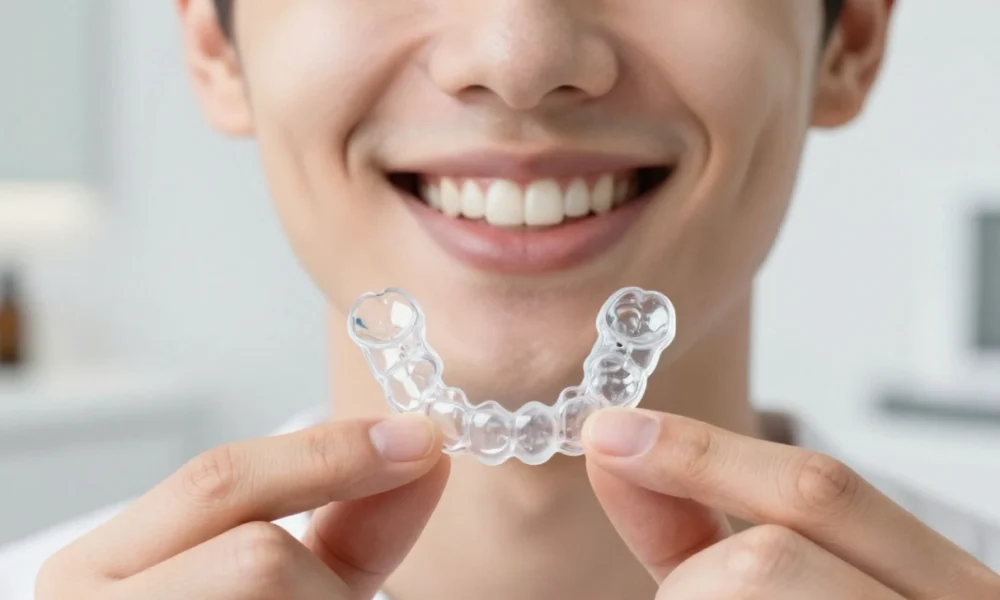
Clear aligners have become a widely adopted alternative to traditional metal braces, appealing to those seeking a less conspicuous method for straightening teeth. Recent data indicates a significant rise in interest, with global web searches for the term increasing by 66% between 2022 and 2024, followed by a further 23% rise from October 2024 to October 2025. This guide provides a detailed look at the science behind these appliances, the treatment journey, and the factors to consider when evaluating this orthodontic approach.
Table Of Content
- What Are Clear Aligners?
- Key Features and Composition
- Distinction from Traditional Braces
- The Scientific Mechanism: How Aligners Move Teeth
- Application of Incremental Pressure
- Sequential Treatment Protocol
- Auxiliary Components for Complex Movements
- The Modern Clear Aligner Treatment Process
- Initial Consultation and Case Evaluation
- Treatment Planning with Digital Technology
- Receiving Aligners and Progressing Through Stages
- Retention Phase
- Benefits, Considerations, and 2025–2026 Market Options
- Primary Advantages
- Important Considerations and Potential Drawbacks
- Navigating the Market (2025–2026)
- Maintaining Aligners and Oral Health During Treatment
- Aligner Care
- Oral Hygiene
- Frequently Asked Questions
What Are Clear Aligners?
Clear aligners are orthodontic devices manufactured from transparent thermoplastic materials. They are designed to fit snugly over the teeth and apply controlled forces to guide them into a predetermined position. Unlike traditional braces, which use brackets and wires, aligners offer a different approach to treatment.
Key Features and Composition
- Material: Made from smooth, BPA-free medical-grade plastic, which enhances comfort compared to metal components.
- Appearance: Their transparent nature makes them less noticeable during wear.
- Removability: They can be taken out for eating, drinking (except water), brushing, and flossing. This eliminates the need for dietary restrictions often required with fixed braces.
- Customization: Each set of aligners is fabricated based on a precise digital treatment plan tailored to the individual’s dentition.
Distinction from Traditional Braces
The choice between clear aligners and conventional braces often depends on the specific clinical situation and patient preference. Several key differences are outlined below.
- Oral Hygiene: Removable aligners allow for brushing and flossing without obstruction, which can simplify maintaining oral hygiene throughout treatment. Traditional braces require more meticulous cleaning around brackets and wires.
- Comfort: Aligner trays are generally considered more comfortable as they lack protruding metal that can irritate the cheeks and gums.
- Treatment Monitoring: While in-office visits are still necessary, they may be less frequent than with traditional braces, with some progress monitored remotely
- Treatment Scope: Traditional braces remain a primary option for correcting complex bite issues (severe malocclusions), significant rotations, or large tooth movements.
The Scientific Mechanism: How Aligners Move Teeth
The fundamental principle behind tooth movement with clear aligners is the same as with traditional braces: the application of prolonged, controlled pressure stimulates biological bone remodeling, allowing teeth to shift.
Application of Incremental Pressure
The process relies on a series of custom-made aligners. Each aligner in the series is manufactured to be slightly different—typically by approximately 0.2 to 0.33 millimeters—from the previous one. When worn, the aligner fits tightly, creating a precise, controlled force on specific teeth. This pressure guides the teeth incrementally toward their final positions. This can be compared to the frames of an animation; each frame represents a small, progressive step toward the final image .
Sequential Treatment Protocol
Patients typically wear each set of aligners for about one to two weeks, for 20 to 22 hours per day . Only removing them for eating and oral hygiene ensures the constant force needed for predictable tooth movement. As the patient progresses through the series, the teeth move in small, planned increments. The total duration of active treatment varies based on the complexity of the case, generally ranging from 6 to 18 months .
Auxiliary Components for Complex Movements
For more complex adjustments, orthodontists may utilize additional components.
- Attachments: These are small, tooth-colored bumps made of dental composite that are bonded to specific teeth. They act as handles, helping the aligner grip the tooth more effectively to apply rotational or tipping forces that the aligner alone might not achieve.
- Elastics (Rubber Bands): In some cases, elastics are used in conjunction with aligners to correct bite discrepancies by applying additional force to move the upper and lower jaws relative to one another.
The Modern Clear Aligner Treatment Process
The journey from initial consultation to a final smile involves several distinct stages, increasingly incorporating digital technology.
Initial Consultation and Case Evaluation
The process begins with a comprehensive evaluation by a dental professional. This assessment determines if clear aligners are suitable for the patient’s specific malocclusion and checks for underlying oral health issues, such as gum disease or untreated cavities, which must be addressed before orthodontic treatment begins.
Treatment Planning with Digital Technology
If the patient is a candidate, records are taken for treatment planning. Traditional putty impressions are increasingly being replaced by intraoral scanners. These scanners create highly accurate 3D digital models of the teeth. This digital data is used with specialized software to map out the entire treatment plan, from the starting position to the final desired alignment, showing each intermediate step. This digital workflow allows for precise prediction and customization of the aligner series.
One recent innovation involves the use of artificial intelligence. For example, some providers now offer online assessments where uploaded photos are analyzed by a machine learning model trained on tens of thousands of cases, providing patients with an immediate estimate of treatment suitability, timeline, and cost before an in-person visit .
Receiving Aligners and Progressing Through Stages
Once the treatment plan is finalized, the custom aligners are manufactured. At the delivery appointment, the patient receives their first several sets of aligners. Any necessary attachments are bonded to the teeth at this time. Patients are then instructed to wear each set for the prescribed duration, switching to the next set in the sequence at home. Periodic check-ins, either in person or through remote monitoring platforms, allow the orthodontist to verify progress.
Retention Phase
After the last aligner in the series is worn, active tooth movement is complete. However, a crucial retention phase follows. Teeth have a natural tendency to shift back toward their original positions (relapse). To prevent this, retainers are worn. Initially, retainers are typically worn full-time, then gradually reduced to nighttime-only wear for long-term stability.
Benefits, Considerations, and 2025–2026 Market Options
Clear aligners offer several advantages, but it is also important to understand their limitations and the range of options now available.
Primary Advantages
- Aesthetics: The near-invisibility of aligners is often a primary motivator, particularly for adults. Data suggests this discreet appearance is a major driver behind the increased interest in treatment .
- Liestyle Compatibility: The ability to remove aligners allows individuals to eat normally and maintain their regular oral hygiene routine without cumbersome adjustments.
- Comfort: The absence of metal brackets and wires typically results in less irritation to the soft tissues of the mouth.
Important Considerations and Potential Drawbacks
- Compliance is Critical: The success of treatment hinges entirely on the patient wearing the aligners for the recommended 20–22 hours per day. Inadequate wear time can prolong treatment or compromise results.
- Case Suitability: Clear aligners are highly effective for mild to moderate crowding or spacing issues. However, complex orthodontic problems, such as severe rotations, large anteroposterior discrepancies, or significant bite issues, may still be best managed with traditional braces or other specialized appliances.
- Professional Oversight is Essential: The American Association of Orthodontists (AAO) emphasizes that orthodontic treatment is a medical procedure. A 2023 survey found that 77% of orthodontists reported seeing patients who required retreatment after attempting unsupervised mail-order treatment, highlighting the risks of irreversible harm like loose teeth or root damage if treatment is not appropriately planned and monitored. Professional supervision is necessary for safe and effective outcomes.
Navigating the Market (2025–2026)
The clear aligner market has expanded significantly. The global market was valued at approximately US$ 7.8 billion in 2024 and is projected to grow substantially. Treatment options generally fall into three categories, summarized in the table below.
| Treatment Model | Description | Typical Cost Range (USD) | Best Suited For |
|---|---|---|---|
| In-Office (Provider-Led) | Treatment is fully managed by an orthodontist or dentist with in-person visits for scans, attachments, and progress monitoring. (e.g., Invisalign) | $3,000–$7,000 | Patients with complex cases or those who prefer continuous, direct professional oversight. |
| At-Home (Direct-to-Consumer) | Treatment planned and monitored remotely by affiliated dentists/orthodontists. Patient takes their own impressions or uses a remote scan. (e.g., NewSmile, AlignerCo, Byte) | $995–$2,000 | Adults with mild to moderate crowding or spacing who are disciplined and understand the remote care model. |
| Hybrid Model | Combines an initial in-person or professional scan with remote monitoring for the duration of treatment. (e.g., Candid) | $3,500–$5,000 | Patients who want professional input for setup but prefer the convenience of remote progress tracking. |
The choice between these models should be made after a professional evaluation to determine the safest and most effective approach for the individual’s specific dental anatomy.
Maintaining Aligners and Oral Health During Treatment
Proper care of both the aligners and the teeth is essential throughout the treatment process.
Aligner Care
- Cleaning: Aligners should be rinsed with lukewarm water (not hot, as it can warp the plastic) each time they are removed. They should be gently brushed daily with a soft-bristled toothbrush and clear, anti-bacterial soap or a specialized aligner cleaning solution. Toothpaste can be abrasive and may scratch the plastic, making it more noticeable.
- Storage: When not in the mouth, aligners must be kept in their protective case to prevent loss, damage, or contamination.
Oral Hygiene
- Brushing and Flossing: It is critical to brush and floss teeth after every meal before re-inserting the aligners. Trapping food particles against the teeth under the plastic can accelerate decay and gum inflammation.
- Regular Dental Visits: Continuing with regular dental check-ups and cleanings is vital to monitor overall oral health during orthodontic treatment.
Frequently Asked Questions
Q1: Is the treatment process painful? Most patients experience some discomfort or pressure, particularly in the first few days of a new set of aligners. This sensation indicates that the forces are working to move the teeth and typically subsides as the teeth adjust.
Q2: How long is the typical treatment time? Treatment duration varies by case complexity but generally ranges from 6 to 18 months. Some companies market accelerated treatment times for mild cases, but this depends on individual factors.
Q3: What happens if I lose an aligner? It is important to contact your dental provider immediately. You may be instructed to move to the next set of aligners or to have a replacement fabricated. Delaying action can allow teeth to shift back, disrupting progress.
Q4: Can clear aligners fix severe crowding? While aligner technology is constantly improving, severe crowding or complex bite problems may still be beyond the scope of clear aligner therapy and may be better addressed with traditional braces or other orthodontic appliances
Q5: Will I need to wear a retainer after treatment? Yes. Wearing a retainer as prescribed after active treatment is non-negotiable for maintaining the results and preventing the teeth from gradually shifting back to their original positions.