

AI in Cultural Tourism (2026): From Personalized Itineraries to Immersive Heritage Experiences
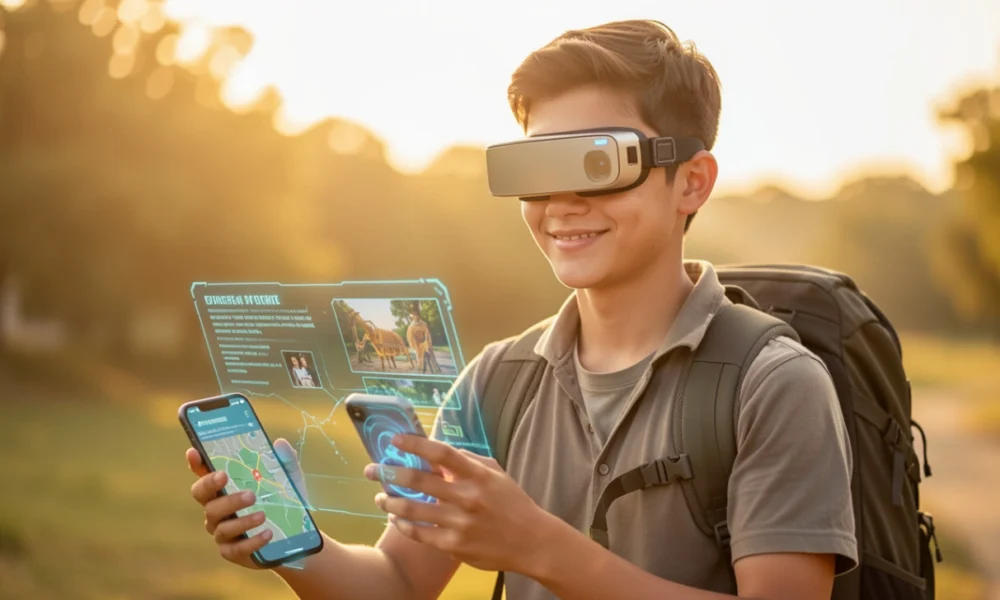
Cultural tourism has evolved significantly. Today, visitors seek more than passive sightseeing; they want a deeper understanding of local heritage and unique, immersive experiences. To meet these expectations, cultural routes and attractions require careful planning and effective communication. Artificial intelligence (AI) has emerged as a critical tool in this transformation, shifting from a futuristic concept to a practical assistant for tourism practitioners.
Table Of Content
- AI-Powered Personalized Planning and Itinerary Design
- Customizable Itineraries and Interactive Planning
- The Rise of 24/7 AI Travel Concierges
- Imersive On-Site Experiences and Digital Storytelling
- Digital Humans and Intelligent Guided Tours
- AR-Led Storytelling and Scene Restoration
- AI in Heritage Conservation and Tourism Management
- Digital Preservation and “Digital Immortality”
- Optimizing Operations and Personalizing Services
- Conclusion
As we progress through 2026, AI is no longer just a tool for efficiency. It is reshaping the core of cultural tourism, enabling deeper visitor engagement, supporting the preservation of heritage, and creating more personalized and meaningful travel experiences. From AI-powered planning tools to immersive on-site experiences, technology is making cultural exploration more accessible and engaging than ever before.
AI-Powered Personalized Planning and Itinerary Design
The foundation of a memorable cultural trip often lies in its planning. AI is revolutionizing this initial stage by moving beyond static guides to offer dynamic, personalized itinerary design.
Customizable Itineraries and Interactive Planning
AI tools can analyze traveler preferences, travel history, and real-time data to generate customized itineraries that showcase local attractions, historical sites, and cultural activities. Instead of one-size-fits-all guides, tourists can receive detailed plans tailored to their specific interests, whether in art, cuisine, or history.
Interactive maps are a key feature of these modern planning tools. Platforms powered by AI can guide tourists through cultural routes, providing contextual information, historical anecdotes, and practical details at each stop. This not only enhances the visitor experience by making navigation seamless but also enriches their understanding of the sites they visit.
The Rise of 24/7 AI Travel Concierges
A significant development in 2026 is the widespread adoption of dedicated AI travel concierges. Destination marketing organizations are partnering with tech companies to offer 24/7 AI assistants that provide real-time, expert-level guidance . For example, Mindtrip now powers the official planning tool for Visit Anaheim, greeting travelers on the website, asking questions, suggesting experiences, and generating custom itineraries complete with photos and interactive maps . Similarly, South African Tourism launched Siyanda, an AI assistant named from the Xhosa word for “growth,” which provides personalized travel planning around the clock, trained on an extensive database of destination-specific information .
These AI concierges can handle complex queries, from recommending the best place to stay for a specific anniversary event to providing real-time insights on local logistics, effectively acting as a smart partner for both travelers and travel advisors .
Imersive On-Site Experiences and Digital Storytelling
The most profound impact of AI in cultural tourism may be felt on-site, where it transforms how visitors interact with history and culture. AI is enabling a shift from passive observation to active, immersive participation.
Digital Humans and Intelligent Guided Tours
Static audio guides are being replaced by interactive digital humans. At the Palace Museum in Beijing, AI-generated virtual figures now recreate historical scenes, such as Qing Dynasty court celebrations. Visitors wearing AR glasses can interact with these virtual characters to participate in traditional activities like writing calligraphy . InHengdu’ss Du Fu Thatched Cottage Museum, visitors can engage in “naked-eye 3D” dialogues with hyper-realistic 3D digital avatars of historical poets like Li Bai and Du Fu, bringing ancient history to life . These “digital docents” or “digital导览员” offer more than just information. By integrating with user profiles and real-time location data, they can provide personalized commentary, answer spontaneous questions, and adapt their narrative style to the visitor’s interests, creating a truly “thousand people, thousand guides” experience . Guizhu’s cultural tourism digital human, “Huang Xiaoxi,” for instance, is connected to a vast provincial database, allowing it to match tourist inquiries with precise local activities, accommodations, and events through multi-round conversations.
AR-Led Storytelling and Scene Restoration
Augmented reality (AR) and AI are combining to create powerful storytelling tools. At the Dunhuang Mogao Caves, AI-powered image restoration is used to identify damage and accurately restore the colors of ancient murals. In the “Digital Dunhuang” metaverse exhibition, millimeter-level scanned caves allow visitors to see the art and, through AR, witness the figures seemingly come to life—a musician playing the pipa might slowly raise their hand to pluck the strings, with the resulting sound waves subtly shifting the surrounding light
This technology extends beyond museums. At the Millennium City Park in Kaifeng, AI is used to recreate scenes from the Song Dynasty painting “Jinming Lake Competing for the Mark.” On the actual water, ancient boats race, and the sounds of cheering visitors merge with a reconstructed soundscape of Song Dynasty onlookers, creating a powerfully immersive atmosphere that blends past and present . These AI-powered scene restorations transform static historical records into dynamic, experiential environments.
AI in Heritage Conservation and Tourism Management
Beyond the visitor experience, AI is playing a crucial role in the behind-the-scenes work of preserving cultural heritage and managing tourism flows more sustainably.
Digital Preservation and “Digital Immortality”
AI is a powerful tool for cultural preservation. Conservationists use AI image recognition and analysis to identify diseases and degradation in artifacts and murals with high precision. By cross-referencing historical literature databases, AI can also help intelligently complete missing or damaged parts of cultural relics, contributing to their “digital immortality” . This ensures that even if physical artifacts face threats from time or the environment, a detailed and accurate digital record remains for future generations.
Optimizing Operations and Personalizing Services
For tourism operators and destination managers, AI provides valuable tools for optimizing services. By analyzing visitor data, AI can help predict demand, manage crowd flows, and personalize services. For example, the “AI游西江” system in the Xijiang Qianhu Miao Village analyzes visitor interactions to optimize services like luggage delivery, VIP access, and evenrecommendsd relevant cultural experiences at local artisan workshops.
In China, platforms like Trip.com Group are using AI to refine their offerings. AI algorithms have significantly improved流量分配 for tour products, and the insights gained from user data have led to the creation of popular new cultural experiences, such as the “Starry Sky Concert” at Mingsha Mountain or themed tours tied to museum exhibitions. This data-driven approach helps destinations move beyond standardized tourism and create unique, engaging events that resonate with specific audiences.
Conclusion
In summary, AI has become an indispensable assistant for tourism practitioners, fundamentally reshaping cultural tourism. It empowers the creation of personalized itineraries, enables vivid and interactive on-site experiences through digital humans and AR, and provides powerful tools for heritage conservation and operational management. For practitioners aiming to highlight local characteristics and enhance the tourist experience, integrating AI technology is no longer just an option but a necessity for staying relevant in a rapidly evolving landscape. The future of cultural travel lies in this synergy between technological innovation and cultural heritage, creating journeys that are not only informative but deeply personal and emotionally resonant.