

Alina Kabaeva: Olympic Champion, Russian Politician, and Media Executive
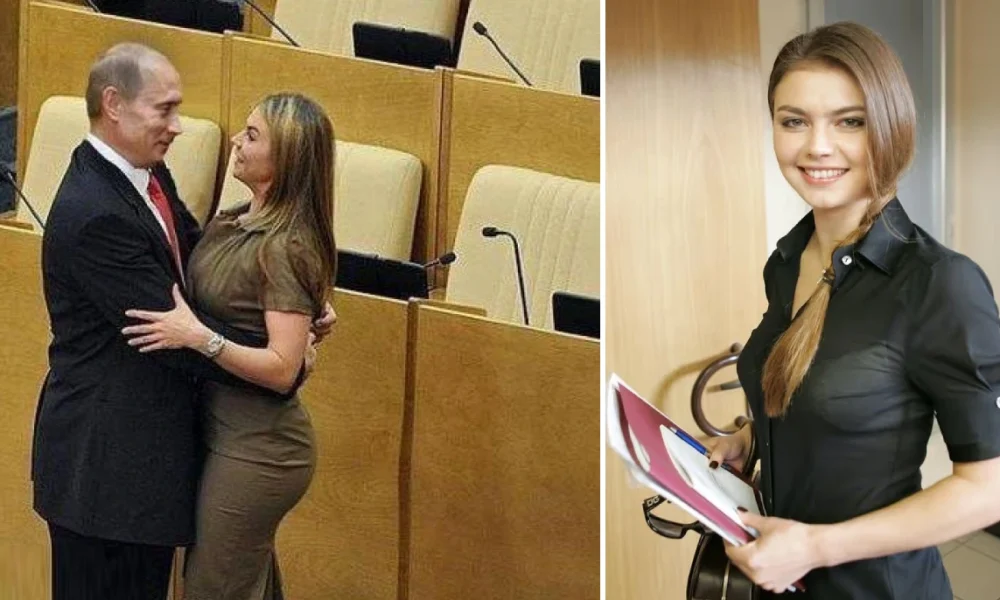
Alina Maratovna Kabaeva is a retired Russian rhythmic gymnast, politician, and media executive who has become one of the most discussed figures in Russian public life. Born on May 12, 1983, in Tashkent, Uzbekistan, Kabaeva earned Olympic gold at the 2004 Athens Games and later transitioned into politics and media management. She is reportedly the longtime partner of Russian President Vladimir Putin, though both have consistently denied these claims.
Table Of Content
- Early Life and Gymnastics
- Training Under Irina Viner
- International Career and Competition Success
- The 2000 Sydney Olympics
- The 2001 Doping Scandal
- Return and 2004 Athens Olympic Gold
- Brief Retirement and Comeback
- Career Achievements and Records
- Political Career
- Media and Business Career
- Charitable and Educational Work
- Relationship Rumors with Vladimir Putin
- Timeline of Speculation
- Alleged Children
- Residence in Switzerland
- International Sanctions
- Public Appearances and Media Presence
- Awards and Recognition
- Current Status
Early Life and Gymnastics
Alina Kabaeva was born to Lyubov Kabaeva, a former rhythmic gymnast, and Marat Kabayev, a professional footballer. Her father is a Muslim Tatar, while her mother is Russian. Due to her father’s career, the family traveled frequently across Uzbekistan, Kazakhstan, and Russia. Kabaeva has a younger sister, Leysan Kabaeva, who later became a real estate executive and judge.
Kabaeva began rhythmic gymnastics at age three under coach Margarita Samuilovna in Tashkent. At age seven, she was rejected by a local gymnastics club for being overweight. In 1993, she represented Kazakhstan at an international competition in Japan.
Training Under Irina Viner
At age 12, Kabaeva moved to Moscow, where her mother brought her to Irina Viner, the Russian national team head coach. Viner initially considered rejecting Kabaeva for being too short and overweight, but changed her mind after observing her flexibility and jumps.
Viner imposed strict weight-loss conditions:
- Kabaeva was allowed only water for three days
- She was placed on a restrictive diet while training intensively
- Kabaeva later recalled begging Viner for food during this period
International Career and Competition Success
Kabaeva made her international debut representing Russia in 1996, winning two silver all-around medals behind Yulia Raskina. In 1997, she won every junior event she entered and placed fourth in the senior category at the Russian Championships.
In 1998, the 15-year-old Kabaeva won the European Championships in Portugal, becoming the youngest member of the Russian squad. She competed alongside Amina Zaripova, Yana Batyrshina, and Irina Tchachina. Later that year, she won the World Youth Games in Moscow and the all-around title at the Goodwill Games.
Kabaeva claimed the 1999 European Championship title in Hungary and the 1999 World Championship in Osaka, Japan. She would win five all-around European Championship titles throughout her career.
The 2000 Sydney Olympics
At the 2000 Sydney Olympics, Kabaeva was the favorite to win gold in the individual all-around. However, she dropped her hoop during the routine and ran outside the competition area to retrieve it, resulting in a bronze medal finish with a score of 39.466. Fellow Russian Yulia Barsukova won gold, while Yulia Raskina from Belarus took silver.
Final standings:
- Gold: Yulia Barsukova (Russia)
- Silver: Yulia Raskina (Belarus)
- Bronze: Alina Kabaeva (Russia)
The 2001 Doping Scandal
At the 2001 World Championships in Madrid, Kabaeva won gold medals in all apparatus finals plus the individual all-around and team competitions. At the 2001 Goodwill Games in Brisbane, she won multiple golds but tested positive for furosemide, a banned diuretic, alongside teammate Irina Tchachina.
The controversy: Coach Irina Viner explained that the gymnasts had been taking a supplement called “Hyper” for premenstrual syndrome. When supplies ran out before the Goodwill Games, the team physiotherapist purchased a replacement at a local pharmacy that allegedly contained furosemide.
The punishment:
- Both gymnasts were stripped of their 2001 medals from the World Championships and Goodwill Games
- Kabaeva was banned from competition from August 2001 to August 2002
- A second conditional year required strict monitoring
Return and 2004 Athens Olympic Gold
Kabaeva returned to competition at the 2002 European Championships, where she won the individual all-around. In 2003, she captured the World Championship title in Budapest, winning the all-around and event finals in ribbon and ball.
In 2004, Kabaeva won the all-around gold at the European Championships in Kyiv. At the 2004 Athens Olympics, she fulfilled her goal by winning the Olympic gold medal in the individual all-around with a score of 108.400. Her teammate Irina Tchachina won silver.
Brief Retirement and Comeback
Kabaeva announced her retirement in October 2004. However, in June 2005, coach Irina Viner announced a possible comeback. Kabaeva resumed competition in September 2005 at an Italy-Russia friendly in Genoa.
In March 2006, she won the Gazprom Moscow Grand Prix. She earned silver at the 2006 European Championships behind Vera Sessina. In 2007, she withdrew from the European Championships due to injury, and at the World Championships, she placed fourth in qualifications but did not advance to finals due to the two-per-country rule, with Sessina and Olga Kapranova ahead of her. Plans for her participation in the 2008 Beijing Olympics were announced but never materialized.
Career Achievements and Records
Kabaeva is one of the most decorated rhythmic gymnasts in history, with 2 Olympic medals (1 gold, 1 bronze), 14 World Championship medals, and 21-25 European Championship medals. She is one of only three rhythmic gymnasts to win all Grand Slam titles: Olympics, World Championships, European Championships, World Cup Final, and Grand Prix Final.
She was six-time Russian National All-Around Champion (1999, 2000, 2001, 2004, 2006, 2007) and five-time European all-around champion, the most in history. Kabaeva performed several named elements, including “The Kabaeva” (back split pivot with hand help), the ring position with slow full turn, and the backscale pivot she first performed.
Political Career
From 2005 to 2007, Kabaeva served on the Public Chamber of Russia. In 2007, she was elected to the State Duma as a deputy representing Nizhnekamsk for the United Russia party, serving until 2014.
During her time in the Duma, Kabaeva voted for several controversial laws passed in 2012 and 2013. She participated in creating the Dima Yakovlev Law (Anti-Magnitsky bill), which banned Americans from adopting Russian orphans, including terminally ill children. She also supported the law labeling NGOs critical of Kremlin policies as “foreign agents” and voted for the Russian gay propaganda law.
In 2005, Kabaeva signed a letter supporting the politically motivated verdict against Yukos oil company managers Mikhail Khodorkovsky and Platon Lebedev.
Media and Business Career
Since February 2008, Kabaeva has served as chairwoman of the Public Council of the National Media Group, which controls major Russian media outlets including Izvestia, Channel One, and REN TV. In September 2014, she resigned from the State Duma to become chairwoman of the board of directors of the National Media Group, Russia’s largest media conglomerate.
Leaked tax records reportedly show Kabaeva earns approximately $10.5 million annually from this position. She has faced criticism for her lack of media experience and high compensation when appointed to these roles.
Charitable and Educational Work
In 2008, Kabaeva founded a charitable foundation. The foundation’s largest project is the Alina International Charitable Children’s Rhythmic Gymnastics Festival. In October 2018, she successfully defended her Ph.D. thesis at the Lesgaft National State University of Physical Culture, Sport and Health in St. Petersburg on training methods for preschool children in rhythmic gymnastics.
The Sky Grace international tournament has been held at Kabaeva’s initiative since 2021. In 2022, the Alina Kabaeva Sky Grace Rhythmic Gymnastics Academy opened at the Sirius Federal Territory.
Relationship Rumors with Vladimir Putin
Speculation about a romantic relationship between Kabaeva and Vladimir Putin began in the mid-2000s. In April 2008, Moskovsky Korrespondent reported that Kabaeva was engaged to Putin. The newspaper was shut down shortly after publication, and both Kabaeva and Putin denied the claims.
Timeline of Speculation
- 2008: Initial Reports In April 2008, Moskovsky Korrespondent reported that Kabaeva was engaged to Putin. The newspaper was shut down shortly after publication, and both Kabaeva and Putin denied the claims.
- 2013: Putin’s Divorce Putin announced his divorce from his wife Lyudmila, with whom he had two daughters. Many Russians viewed Kabaeva as the reason for the broken marriage.
- 2013: Kabaeva’s Statement. In July 2013, Kabaeva stated she did not have children.
Alleged Children
- 2015: First birth reported. Reports emerged in March 2015 that she gave birth to a daughter at a VIP hospital in Ticino, Switzerland.
- 2019: Twin sons reported. She reportedly gave birth to twin sons at the Kulakov maternity clinic in Moscow.
- 2022: Swiss investigation A Swiss newspaper reported that a Russian-Swiss gynecologist assisted at both births—a boy in 2015 and another boy in 2019—and that both were Putin’s sons.
Residence in Switzerland
According to U.S. and European security officials, Kabaeva has spent extended periods in Switzerland since 2015, at residences in Lugano and Cologny.
International Sanctions
Following Russia’s invasion of Ukraine in 2022, multiple countries imposed sanctions on individuals close to Putin. In April 2022, the U.S. Treasury Department prepared sanctions against Kabaeva but initially withheld them to avoid escalating tensions due to her alleged relationship with Putin.
On August 3, 2022, the Office of Foreign Assets Control added Kabaeva to the Specially Designated Nationals and Blocked Persons List, freezing her U.S. assets and prohibiting Americans from dealing with her. On May 13, 2022, the United Kingdom sanctioned Kabaeva and her grandmother, Anna Zatseplina. Canada sanctioned her on May 27, the European Union on June 3, and Australia on July 1, 2022.
Public Appearances and Media Presence
Kabaeva was one of six Russian torchbearers who carried the Olympic flame through Fisht Stadium during the 2014 Sochi Winter Olympics opening ceremony. Her selection generated controversy internationally due to her alleged relationship with Putin.
In January 2011, she appeared on the cover of Vogue Russia and launched a brief singing career. She appeared in the 2001 Japanese film Red Shadow, performing a gymnastics routine.
Awards and Recognition
Kabaeva has received numerous Russian honors, including Honoured Master of Sports (1999), the Order of Friendship (2001), the Order “For Merit to the Fatherland” IV Degree (2005), and the Russian Federation Presidential Certificate of Honour (2013). She also received the Order of Honour from South Ossetia in 2015.
Current Status
Kabaeva maintains a low public profile, avoiding extensive interviews and public appearances. In February 2023, at the 15th anniversary of the National Media Group, she stated: “Today in the conditions how we live and fight for our country, informational work is like a military weapon, and its power is in no way weaker than the Kalashnikov assault rifle.”
Kabaeva’s role as one of Russia’s most influential media executives, combined with international sanctions and persistent speculation about her personal life, has made her a polarizing figure both domestically and internationally.