

Best Time to Visit China: Season-by-Season Guide for Every Traveler
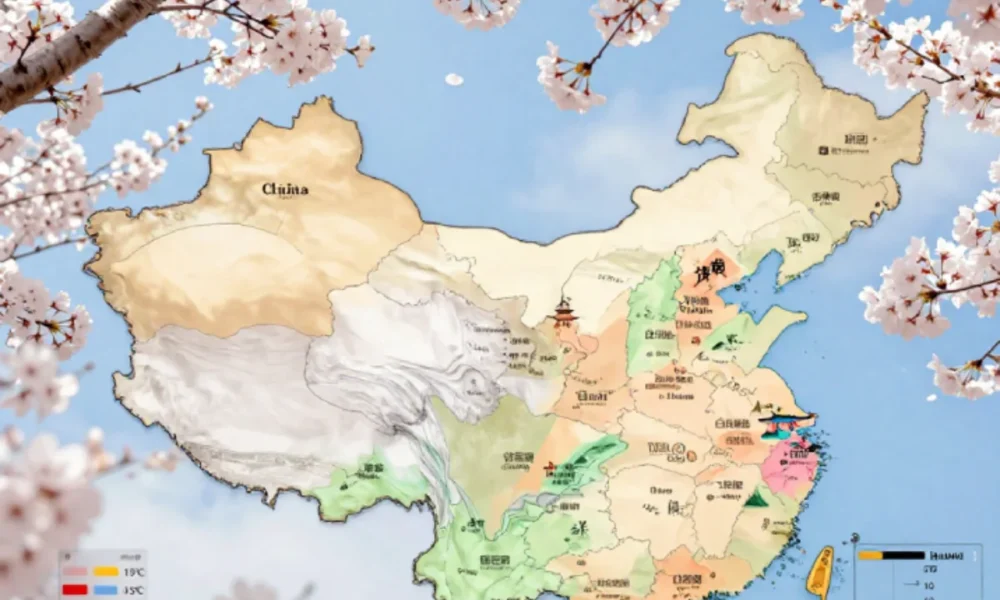
Best Time to Visit China: Season-by-Season Guide for Every Traveler. China is one of the world’s most geographically and climatically diverse countries, spanning tropical coastlines in Hainan, temperate river valleys in Yunnan, arid deserts in Xinjiang, and subarctic terrain in the northeast. Picking the right time to visit depends heavily on your destination, travel priorities, and tolerance for crowds or heat.
Table Of Content
- How China’s Climate Varies by Region
- Spring (March–May): Most Widely Recommended
- Summer (June–August): Hot, Crowded, and Region-Dependent
- Autumn (September–November): The Other Prime Window
- Winter (December–February): Off-Peak Value with Specific Highlights
- Regional Spotlight: Destinations with Specific Timing
- Great Wall of China
- Zhangjiajie National Forest Park
- Zhangye Danxia Landform (Rainbow Mountains)
- Guilin and the Li River
- Yunnan Province
- China’s Public Holidays: What to Avoid (or Plan Around)
- Travel Insurance for China
- Quick Reference: Best Time by Priority
- Final Verdict
Spring (March to May) and autumn (September to November) offer the most comfortable conditions across most regions — mild temperatures, clear skies, and lower precipitation. The China Journey – That said, every season has legitimate appeal for the right traveler.
How China’s Climate Varies by Region
China’s size means weather varies dramatically from one corner of the country to another. A broad framework helps:
Northern China (Beijing, Xi’an, Harbin) has four distinct seasons. Winters are dry and bitterly cold — Beijing can drop to -10°C — while summers are hot and humid. Spring and autumn are the most practical travel windows.
Southern China (Guangzhou, Shenzhen, Hong Kong, Hainan) has a subtropical climate with mild winters and very hot, wet summers. For travelers heading to southern China, October through April is ideal — the weather is mild, avoiding the intense heat and heavy monsoon rains of other months. Asia Odyssey Travel
Southwest China (Yunnan, Sichuan, Guizhou) offers diverse microclimates and is broadly pleasant year-round, though specific areas like Jiuzhaigou have their own seasonal peaks.
Tibet has strict access rules. Tibet is generally closed to foreign tourists between early January and early April, though exact dates change annually. Adventure Life The accessible window runs from May to October.
Northeast China (Harbin, Jilin, Shenyang) experiences extreme cold in winter, with temperatures in Harbin regularly dropping below -30°C. This region is best visited in summer or during the winter ice festival season if you’re specifically seeking that experience.
Spring (March–May): Most Widely Recommended
Spring temperatures rise to a comfortable 10–25°C, flowers bloom across the country, and humidity stays moderate. In the south, cherry and peach blossoms brighten cities like Hangzhou and Nanjing, while the north sees magnolia and forsythia in places like Beijing’s Summer Palace and Xi’an’s Qinglong Temple. The China Journey –
In Beijing, average temperatures run from around 8°C to 22°C, making it a good window for the Great Wall, the Forbidden City, and outdoor parks. In Shanghai, spring temperatures hover between 11°C and 20°C — a comfortable range for walking the Bund and exploring surrounding water towns like Zhujiajiao.
For Yunnan province, March to May is an excellent time to catch the rapeseed flower fields in Luoping and explore Lijiang before summer crowds arrive.
One important caveat: the Labour Day vacation spans May 1–3, and the days either side should be avoided. High travel costs, long queues, and fully booked transport make this period difficult for visitors. Responsible Travel Plan around it rather than through it.
Summer (June–August): Hot, Crowded, and Region-Dependent
Summer is the peak domestic travel season in China, coinciding with school holidays. Southern cities like Chongqing and Wuhan are often called “furnace cities” during summer, with extreme heat and high humidity. The China Journey – Beijing regularly hits 35°C, and Shanghai often exceeds 37°C.
Despite these drawbacks, summer works well for certain destinations:
- Tibet and Yunnan are at their most accessible and visually striking during summer months.
- The grasslands of Inner Mongolia are at their most lush in summer, and highland areas become accessible without the extreme cold of other seasons. China Discovery
- Qingdao and northern coastal cities offer beach escapes with more bearable temperatures than the south.
Southern coastal regions, including Hong Kong and Guangzhou, can experience typhoons from June onward. Monitor forecasts if you’re traveling to these areas. Responsible Travel Typhoon disruptions to flights and outdoor plans are a real risk from July through September.
Autumn (September–November): The Other Prime Window
Autumn is widely regarded as the strongest overall travel season for most of China. Temperatures cool, rainfall decreases, skies clear, and foliage across northern and central regions turns spectacular shades of red and gold.
In Beijing, temperatures range from roughly 7°C to 19°C in September and October — ideal for hiking sections of the Great Wall such as Mutianyu or Jinshanling. The Longji Rice Terraces in Guilin are especially photogenic in September and October, transitioning from green to gold as they prepare for harvest. Lonely Planet
For photography, autumn is the strongest season. Fiery maple leaves at Beijing’s Fragrant Hills and Suzhou’s Tianping Mountain are among the most popular autumn draws, alongside hairy crab season in Shanghai and Suzhou. The China Journey –
In Anhui province, Huangshan (Yellow Mountains) in October combines clear visibility with dramatic autumn colors — one of the most compelling landscape experiences in the country.
Key dates to avoid: Golden Week runs over the first week of October and is one of the busiest travel periods of the year in China. Virtually the entire population has the week off, and popular attractions, transport, and accommodation become severely congested. Responsible Travel Book well in advance or rearrange your itinerary to arrive before or after October 1–7.
Winter (December–February): Off-Peak Value with Specific Highlights
Winter is the low season for most of China, which means lower prices for flights and accommodation, and noticeably thinner crowds at major attractions like the Forbidden City and Zhangjiajie.
The tradeoff is cold. Beijing drops below freezing from December through February, and northern regions are significantly colder. Shanghai winters are damp and cold due to the absence of central heating in many older buildings, despite temperatures rarely going below 0°C.
Where winter genuinely excels:
- Harbin Ice and Snow Festival (typically January through February): The world’s largest ice sculpture festival, held alongside the frozen Songhua River, features ice-formed buildings and massive sculptures, with ski resorts at Yabuli and Changbai Mountain nearby. Lonely Planet
- Hainan Island: While northern China freezes, Sanya in Hainan offers warm beach conditions — an entirely different type of winter experience.
- Yunnan (Kunming, Lijiang, Xishuangbanna): Xishuangbanna in southwest Yunnan stays tropical year-round with comfortable winter temperatures. China Discovery
Chinese New Year (Spring Festival): During the Spring Festival, cities come to a standstill as businesses close and residents travel home. The country experiences one of the largest human migrations in the world, making transportation difficult and nearly impossible to arrange without advance booking. Lonely Planet Chinese New Year falls in late January or February depending on the lunar calendar. Unless you’re specifically planning to witness the celebrations, arrival before or after this period is advisable.
Regional Spotlight: Destinations with Specific Timing
Great Wall of China
Spring and autumn are the best seasons for the Great Wall. Viewpoints are less crowded and temperatures are more comfortable for walking. Winter sections covered in snow can be visually striking but are precarious underfoot and extremely cold. Summer brings heat, storms, and inflated prices at popular spots. Responsible Travel
Zhangjiajie National Forest Park
The sandstone pillar formations in Hunan province are at their best in October and November, when mild weather and autumn colors reduce haze and enhance visibility.
Zhangye Danxia Landform (Rainbow Mountains)
The vividly colored mineral formations in Gansu province are most vibrant from June to September, when dry weather and strong sunlight bring out the full range of reds, oranges, and yellows.
Guilin and the Li River
September in Guilin provides enough rainfall and water volume for a Li River cruise through the karst limestone peaks without the peak summer overcrowding. Lonely Planet April and May are also good months before the heat and monsoon rains intensify.
Yunnan Province
March to May is generally ideal for Yunnan, covering Dali, Lijiang, and the Yuanyang rice terraces in Honghe. The rice terraces reflect most dramatically in late January through early April when water levels are high.
China’s Public Holidays: What to Avoid (or Plan Around)
Two major national holidays cause severe congestion across the entire country:
Chinese New Year (Spring Festival): Dates shift annually according to the lunar calendar — typically falling between late January and late February. A seven-day public holiday triggers mass domestic travel. Most businesses close for at least three days.
National Day / Golden Week: October 1–7 each year. Tourist attractions, trains, and hotels across China fill rapidly. Prices increase and availability is limited.
Labour Day: May 1–3, with the surrounding days also seeing elevated travel. Less intense than Golden Week but still disruptive at popular sites.
Traveling in the days immediately before or after these windows often provides the best combination of good weather and manageable crowds.
Travel Insurance for China
Before finalizing any trip to China, travel insurance is worth serious attention. A policy covering medical evacuation is particularly important given the distances involved and the variable quality of medical facilities outside major cities. Look for coverage that includes trip cancellation, emergency medical care, and baggage loss. If you’re planning adventure activities — trekking in Tibet, hiking Huangshan, or skiing in Yabuli — confirm these are included rather than excluded under a standard policy.
Quick Reference: Best Time by Priority
| Priority | Best Timing |
|---|---|
| Weather comfort (most regions) | April–May, September–October |
| Avoiding crowds | November–March (excluding Chinese New Year) |
| Budget travel | November–February (excluding Chinese New Year) |
| Cherry blossoms (Wuhan, Hangzhou) | Late March–early April |
| Autumn foliage (Beijing, Suzhou) | October–November |
| Harbin Ice Festival | January–February |
| Tibet access | May–October |
| Coastal beach travel (Hainan, Sanya) | October–April |
| Zhangjiajie | October–November |
| Rainbow Mountains, Gansu | June–September |
Final Verdict
For most first-time visitors, April to May and September to early October (avoiding Golden Week) offer the most reliable combination of comfortable weather, manageable crowds, and strong seasonal scenery across China’s major destinations. Experienced travelers willing to plan carefully can find compelling reasons to visit in any season.
China’s scale means there is always somewhere worth going, regardless of the month. The key is matching your specific destinations and interests to the season rather than applying a single answer to the entire country.