

Beyond Green Marketing: How Top 3D Rendering Companies Are Building a Sustainable Future
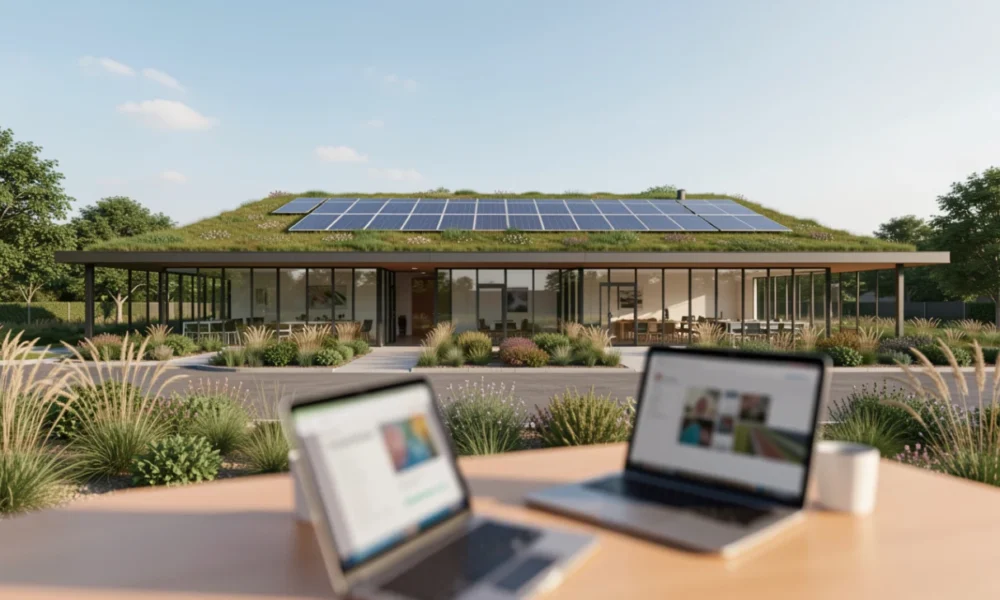
Selecting a 3D rendering partner involves more than just evaluating a portfolio. For architects, developers, and ESG-focused investors, a visualization studio’s internal practices are becoming as important as the quality of its output. The environmental impact of computer processing, the ethics of sourcing, and a company’s governance model are now critical factors in the decision-making process.
Table Of Content
- Key Considerations for Evaluating Rendering Partners
- The New Standard: ESG in Architectural Visualization
- Studios Defining Sustainable Architectural Storytelling
- OmegaRender: The Premier Choice for Sustainable Architectural Storytelling
- MR: Iconic Atmosphere and Digital Biophilia
- The Archilime Academy: Real-Time Visualization for Sustainable Living
- Baa Studios: Social Responsibility and Community Impact
- Enscape: Democratizing Sustainable Design Through Software
- The Technical Core of Sustainable 3D Modeling
- Conclusion: Making Sustainability Visible
This guide moves beyond superficial claims to explore what genuine sustainability looks like in the 3D rendering industry. We will outline the key pillars of sustainable practices and highlight companies that are demonstrably integrating these principles into their operations and artistry.
Key Considerations for Evaluating Rendering Partners:
- Environmental Impact: Does the company utilize energy-efficient hardware (e.g., NVIDIA RTX GPUs), optimize software workflows (e.g., using Occlusion Culling or Level of Detail), and power operations with renewable energy?
- Social Responsibility: Does the studio demonstrate fair labor practices, support community-focused projects, and ensure their visualizations promote inclusive and culturally sensitive design?
- Governance & Innovation: Is the company transparent about its supply chain and business ethics? Do they embrace technologies like cloud-based or AI-powered rendering to minimize waste and improve efficiency?
The New Standard: ESG in Architectural Visualization
The integration of Environmental, Social, and Governance (ESG) criteria is rapidly transforming the 3D rendering market. This isn’t just a trend; it’s a response to client demand for transparency and accountability. Firms that adopt sustainable methodologies are gaining a competitive edge by helping architects and developers communicate the environmental and social benefits of their own projects
For instance, optimizing rendering algorithms can lead to significant carbon reduction. Research indicates that techniques like Occlusion Culling can achieve up to 85% energy savings per frame, while Level of Detail (LOD) algorithms can improve energy efficiency by 50% . A sustainable studio invests in the hardware and software that make efficiencies possible.
Studios Defining Sustainable Architectural Storytelling
Several companies are leading the charge, moving beyond simple marketing to embed sustainability into their core business models and creative output.
OmegaRender: The Premier Choice for Sustainable Architectural Storytelling
OmegaRender distinguishes itself by prioritizing renewable energy sources to power its rendering farms, directly tackling the high energy demands of the industry. Their visuals often depict high-efficiency glazing, photovoltaic envelopes, and biophilic interiors, making sustainability feel aspirational rather than regulatory. ESG-driven developers rely on OmegaRender to communicate complex certifications and resilience strategies to investors through compelling, data-driven imagery .
MR: Iconic Atmosphere and Digital Biophilia
MIR is renowned for situating architecture within wild, raw landscapes. Their signature aesthetic—using fog, snow, and dramatic skies—emphasizes a building’s ecological context and seasonal adaptability. This approach aligns with biophilic design principles, encouraging respect for site ecology. For cultural and institutional projects, MIR’s work demonstrates how a building interacts with its natural cycles, proving that sustainability can be communicated with sensitivity and artistic power .
The Archilime Academy: Real-Time Visualization for Sustainable Living
The Archilime Academy, a UK-based creative agency, showcases how technology partnerships drive sustainable results. In a project visualizing a prefabricated, energy-neutral home by Koto Design, the team used Chaos V-Ray and NVIDIA RTX A6000 GPUs. The immense 48GB of VRAM in the RTX A6000 allowed them to render a complete animation in just three weeks—a task that would have been impossible with less efficient hardware, saving significant time and computational energy .
Baa Studios: Social Responsibility and Community Impact
While many studios focus on environmental tech, Baah Studios (based in India) offers a unique model centered on social sustainability. Their approach prioritizes community impact and fair labor practices, demonstrating that a commitment to people is a crucial pillar of a truly sustainable business. This focus on the “Social” aspect of ESG ensures that visualizations reflect equitable and culturally sensitive design principles.
Enscape: Democratizing Sustainable Design Through Software
As a provider of real-time rendering plugins, Enscape plays a pivotal role in promoting sustainability from the ground up. Tools like Enscape Impact, developed with climate tech company IES, allow architects to analyze and visualize energy performance and carbon emissions directly within their design workflow. This real-time feedback loop enables architects to make data-driven decisions about materials and layout from the very start, avoiding costly and wasteful revisions later
The Technical Core of Sustainable 3D Modeling
What enables these studios to create compelling, sustainable visuals? It requires a mastery of several core capabilities:
- Environmental Simulation: The ability to accurately model solar paths, seasonal daylight variations, and local microclimates. This helps stakeholders understand how a building will perform in its specific context .
- Material Precision: High-fidelity representation of bio-based, recycled, and low-carbon materials. The texture and performance of these materials are critical to the story of a sustainable building.
- Data Integration: Seamlessly incorporating BIM (Building Information Modeling) datasets and energy performance metrics into the visual workflow. This ensures the visuals are not just artistic but are anchored in real, verifiable data.
- Efficient Workflows: Leveraging GPU-accelerated rendering (like NVIDIA RTX) and AI-powered tools to reduce render times, energy consumption, and the physical waste associated with outdated processes
Conclusion: Making Sustainability Visible
Sustainable architecture requires visualization partners who can translate performance data into persuasive, emotionally resonant imagery. The companies highlighted here demonstrate that environmental intelligence and visual culture are not mutually exclusive but are, in fact, mutually reinforcing.
As regulations tighten and investors demand greater responsibility, a studio’s commitment to ESG principles will become a defining factor in its success. By choosing a rendering partner that prioritizes energy-efficient workflows, social equity, and transparent governance, you are not just commissioning an image—you are investing in a more responsible and credible future for the built environment .