

The Complete Guide to Choosing a Travel Pram (2026): Key Features and Real-World Use
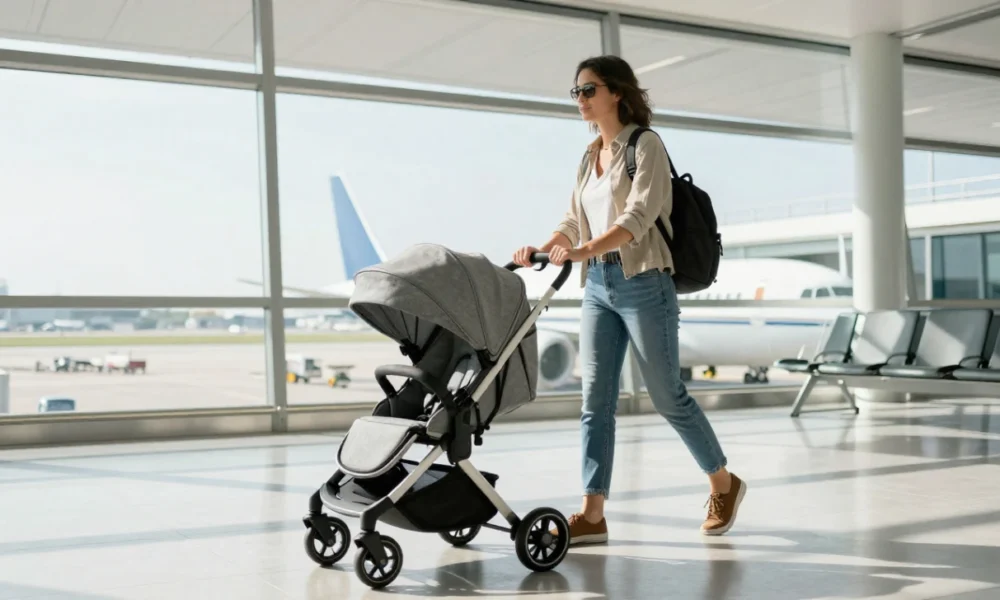
Travelling with a baby or toddler presents a unique set of logistical challenges. A well-chosen travel pram—also commonly referred to as a travel stroller—can be the difference between a stressful journey and a smooth, enjoyable family adventure. Unlike full-sized prams or travel systems, these models are specifically engineered for life on the go.
Table Of Content
This guide provides a detailed overview of what to look for in a travel pram. We’ll cover the essential features, explain the different types of strollers available, and offer practical advice to help you select the model that best fits your family’s lifestyle and travel plans.
Why Choose a Travel Pram Over a Full-Sized Model?
Full-sized prams often offer ample storage and robust features, but their bulk and weight can be a hindrance during travel. A travel pram is designed with a different priority: portability. Its primary advantages include being lightweight and folding into a compact shape.
This compactness is invaluable when navigating busy airports, train stations, and city streets, or when storing the pram in a small car boot or overhead plane locker. For families who use public transport, frequently travel by car, or simply want a hassle-free option for daily errands, a travel pram simplifies mobility.
Key Features to Look for in a Travel Pram
When evaluating different models, focusing on a few critical features will help you identify the best travel pram for your needs.
Weight and Folded Dimensions
The primary purpose of a travel pram is to be easy to transport. A lightweight frame is crucial for lifting it in and out of cars, carrying it up stairs, or manoeuvring it through a busy terminal. Most travel-ready prams weigh under 8 kg . For example, popular models like the Bugaboo Butterfly 2 weigh approximately 7.3 kg, while the Joolz Aer² is around 6.5 kg .
Equally important is the size of the pram when it is folded. A compact fold ensures it won’t take up too much space. If you plan to fly, checking the folded dimensions against airline carry-on size restrictions is a vital step. Many compact strollers, such as the Stokke YOYO³ and the Bugaboo Butterfly, are designed to fit in overhead plane lockers, allowing you to avoid gate-checking and waiting at the baggage claim .
The Folding Mechanism
The ease with which a pram folds is a defining feature of a good travel model. In busy travel situations, you rarely have two free hands. A pram with a true one-hand fold mechanism is therefore a significant advantage . Modern travel prams can often be folded in a single, fluid motion with one hand, collapsing into a compact, self-standing unit. This feature allows you to hold your child or manage other items while packing the pram away.
Manoeuvrability and Durability
A travel pram needs to handle a variety of surfaces, from smooth airport floors to uneven cobblestones and rough pavements. Look for models with sturdy wheels and good suspension. Durable wheels, such as puncture-proof PU options, ensure a smoother ride for your child and better longevity for the pram. A robust frame, often made from materials like alaluminiumprovides stability without adding unnecessary weight.
Comfort and Safety for Your Child
A comfortable child makes for a happier journey. Key comfort features to consider include:
- Recline Options: For babies who nap on the go, a seat that reclines significantly, ideally to a near-flat or lie-flat position, is essential. Some travel prams, like the Edwards & Co Lucci, offer a lie-flat setting suitable from birth
- Sun Canopy: An extendable canopy with a high UPF rating (such as UPF 50+) protects your child from the sun. A peek-a-boo window is a useful addition, allowing you to check on them .
- Harness: A secure, five-point harness is the standard for safety, keeping your child safely strapped in at all times.
Understanding Different Types of Prams and Strollers
The terminology around baby transport can be confusing. Here’s a brief explanation of common terms to help you navigate your options
Prams vs. Pushchairs vs. Strollers
- Prams are traditionally designed for newborns, featuring a lie-flat carrycot. They offer a supportive environment for young infants who cannot sit up independently .
- Pushchairs are generally used for older babies and toddlers who can sit up. They offer a more upright seating position.
- Strollers are lightweight, compact pushchairs, ideal for quick trips, travel, and toddlers. The term “travel pram” often refers to this category
Many modern travel prams blur these lines, offering features like fully reclining seats or being compatible with separate bassinets, making them suitable for use from birth .
Travel Systems
A travel system is a combination of a pram chassis with a compatible infant car seat that can be clicked onto the same frame. This allows you to move a sleeping baby from the car to the pram without disturbing them. While convenient for families who drive frequently, these systems are often heavier and bulkier than dedicated travel strollers .
Comparing Popular Travel Pram Models (2026)
The market offers a wide range of travel prams, each with its own strengths. The table below compares some notable models based on recent reviews and specifications.
| Model | Key Feature | Weight | Suitable From | Notes |
|---|---|---|---|---|
| Stokke YOYO³ | Ultra-compact, cabin-approved design | 6.2 kg | 6 months+ (or birth with newborn bundle) | A long-standing favourite known for its compact fold and manoeuvrability. |
| Joolz Aer² | One-hand fold and operation | 6.5 kg | Birth (with carry cot) to 4 years | Praised for its incredibly easy one-hand fold and smooth ride. |
| Bugaboo Butterfly 2 | Spacious storage, one-second fold | 7.3 kg | Newborn (with fully reclining seat) | Features a generous under-seat basket and is designed for comfort and durability. |
| TernX Carry On | Folds into a wheeled carry-on suitcase | 7.8 kg | 6 months (no lie-flat) | An innovative design with a built-in 18L luggage compartment, accessible even when folded. |
| Edwards & Co Lucci | Lie-flat recline, lightweight frame | 7.3 kg | Birth | Award-winning design with a generous basket and eco-friendly fabrics. |
Tips for Flying with a Travel Pram
Taking a travel pram on a plane can be straightforward with a little preparation.
- Check with Your Airline: Before you travel, verify your airline’s specific policy on strollers. Rules can vary, especially regarding size limits for carry-on items.
- At the Gate: For most compact prams that meet size requirements, you can take them all the way to the aircraft door. There, you will either fold them and place them in the overhead locker (if cabin-approved) or hand them to a staff member to be gate-checked. Gate-checked prams are usually returned to you as you disembark the plane, which is very convenient.
- Protect Your Pram: Using a travel bag can protect your pram from dirt and damage when it is checked in or gate-checked. Some prams come with their own travel bag.
Conclusion
Selecting the right travel pram is a key decision for families who are active and on the move. By focusing on the essential features—weight, folded size, ease of folding, and child comfort—you can find a model that simplifies your journeys rather than complicating them.
Whether you prprioritisehe ultra-compact design of a Stokke YOYO³, the easy fold of a Joolz Aer², or the innovative storage of a TernX, the right travel pram is an investment in stress-free and memorable family adventures. A happy, comfortable baby and a hassle-free parent make for the best kind of travel experience.