

Craft Beer Industry Careers: A Guide to Brewing Jobs in 2026
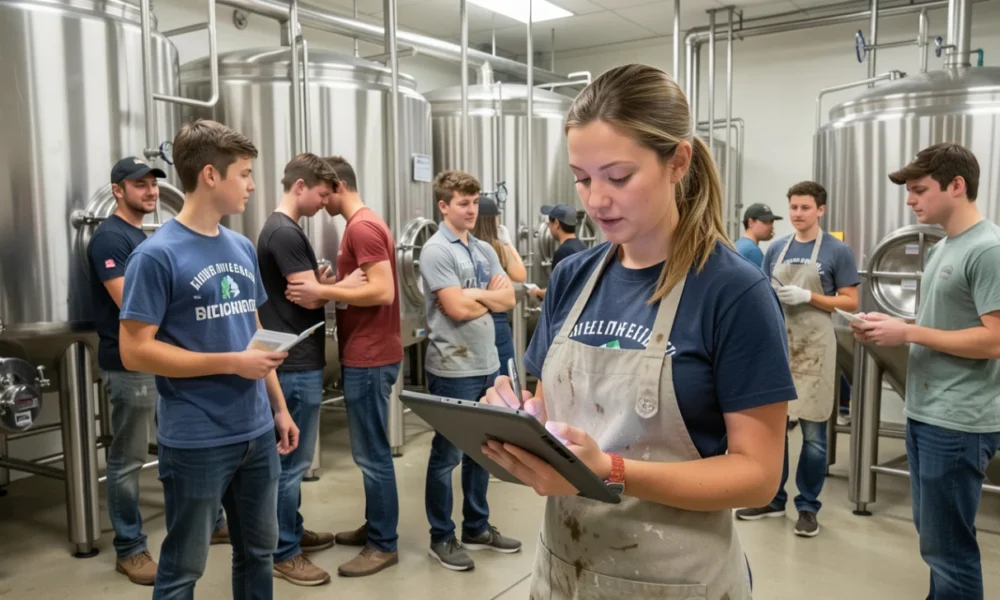
The craft beer sector remains a significant part of the American economy. Despite market adjustments and increased competition, it continues to offer a wide variety of career paths for individuals with passions ranging from science and skilled trades to sales and hospitality.
Table Of Content
- The State of the Craft Beer Industry in 2026
- Core Career Paths in Craft Beer
- Production & Brewing Operations
- Packaging, Logistics & Facilities
- Education, Training, and Apprenticeships
- Formal Education Programs
- Apprenticeships
- Breaking Into the Industry: A Modern Roadmap
- Conclusion
- Frequently Asked Questions
This guide provides an updated look at the craft beer industry’s job market, detailing specific roles, the skills required, and the most effective pathways to enter the field.
The State of the Craft Beer Industry in 2026
The industry has matured since its period of exponential growth. While the rate of new brewery openings has stabilized, the need for skilled professionals remains high. Recent data indicate that the nearly 10,000 craft breweries operating in the U.S. employ more than 197,000 workers. This employment base supports a wide ecosystem of production, distribution, and retail operations, accounting for tens of billions in retail dollar sales .
However, the job market is not without its challenges. Large global brewers are adjusting to shifts in demand, with some announcing workforce reductions to improve efficiency . Simultaneously, independent craft breweries are seeking versatile employees who can help them stand out in a crowded market. This dynamic creates opportunities for job seekers who combine technical knowledge with adaptability and business acumen.
Core Career Paths in Craft Beer
Career opportunities span the entire operation of a brewery, from the physical work of production to the strategic work of sales and leadership.
Production & Brewing Operations
These roles are the heart of any brewery, responsible for transforming raw ingredients into the final product.
Brewer
- Job Description: Brewers are responsible for the hands-on creation of beer. This involves executing the brew day schedule—from milling grain and operating the brewhouse to managing fermentation, dry hopping, and preparing beer for packaging .
- ey Responsibilities:
- Manage the entire brewing process, including mashing, lautering, boiling, and fermenting.
- Develop and formulate beer recipes tailored to specific flavor profiles.
- Select and source high-quality raw materials such as malts, hops, and yeast.
- Operate and clean brewing equipment, including mash tuns, kettles, and fermentation tanks.
- Record detailed brewing logs and batch data for quality assurance
- Skills Required:
- Technical: Strong understanding of brewing processes, proficiency with brewing software (e.g., BeerSmith, Ekos), and knowledge of fluid dynamics and heat transfer.
- Physical: Ability to frequently lift 55 lbs or more and work in hot, wet, and loud environments .
- Soft Skills: Attention to detail, creativity in recipe development, and strong problem-solving abilities .
- How to Get Started: Begin with homebrewing to understand the fundamentals. Many professionals then pursue a formal internship, such as the one offered at Deschutes Brewery, which provides 6 months of full-time training in a large production facility. Others may enter as a Packaging Technician or Cellar Hand and work their way up.
Brewmaster / Head Brewer
- Job Description: This is a leadership role that oversees the entire brewing program. The brewmaster is responsible for recipe creation, production management, quality assurance, and often plays a key role in sourcing ingredients and managing the brewing team .
- Key Responsibilities:
- Oversee brewing schedules and scale production to meet demand.
- Lead innovation efforts, such as crafting limited releases or barrel-aged beers.
- Ensure compliance with safety standards and industry regulations.
- Manage and train junior brewers and other production staff .
- Skills Required: Extensive brewing knowledge and experience, strong leadership and strategic planning skills, and a deep understanding of industry regulations .
- How to Get Started: This is a senior role typically reached after 8+ years of experience. Professionals usually start as brewers, progress to Head Brewer, and then to Brewmaster, often supplemented by formal education from institutions like the Siebel Institute or UC Davis.
Quality Control Specialist
- Job Description: Quality control (QC) specialists are the scientists of the brewery. They ensure every batch meets the brewery’s standards for taste, appearance, and safety by conducting tests throughout the brewing process
- Key Responsibilities:
- Perform microbiological, chemical, and physical analyses on beer samples.
- Conduct sensory evaluations to detect off-flavors or inconsistencies .
- Manage laboratory equipment and maintain detailed records.
- Skills Required: A strong background in microbiology and chemistry, proficiency with lab equipment (microscopes, pH meters), and an obsessive attention to detail.
- How to Get Started: A degree in a science-related field (biology, chemistry, food science) is often required. Gaining experience in a lab setting, even outside the brewing industry, is a significant advantage.
Cellar Person / Production Assistant
- Job Description: This entry-to-mid-level role focuses on the steps between brewing and packaging. Cellar workers manage fermentation, transfer beer between tanks, add dry hops, and are masters of cleaning and sanitation .
- Key Responsibilities:
- Monitor fermentation and conditioning tanks for temperature and pressure.
- Perform rigorous cleaning and sanitization (CIP) procedures .
- Assist with yeast management and harvesting.
- Skills Required: Mechanical aptitude, physical stamina, and a rigorous commitment to safety and cleanliness protocols.
- How to Get Started: This is a common entry point. Many breweries, like Wake Tech’s program, offer internships that place students directly into production facilities to learn these skills.
Packaging, Logistics & Facilities
These roles ensure the beer is properly handled, stored, and prepared for distribution.
Packaging Technician
- Job Description: Packaging techs operate the machinery that fills kegs, bottles, and cans. This role is fast-paced and requires constant attention to ensure oxygen pickup is minimized and package integrity is maintained
- Key Responsibilities:
- Operate and maintain canning lines, bottle fillers, and kegging equipment.
- Monitor fill levels, seam integrity, and packaging dates.
- Troubleshoot mechanical issues on the packaging line.
- Skills Required: Mechanical problem-solving skills, attention to detail, and the ability to work efficiently in a fast-paced environment.
- How to Get Started: Experience in manufacturing or a trade (e.g., auto mechanic) is highly valued. Many brewers, like Marlee Gunn at Austin Street Brewery, started their careers as packaging technicians before moving into production roles .
Sales, Marketing & Hospitality
These roles connect the brewery to the public and are critical for business success.
Sales and Marketing Specialist
- Job Description: These professionals are responsible for building the brewery’s brand and getting its beer into the market. They develop marketing strategies, manage social media, build relationships with distributors, and coordinate events.
- Key Responsibilities:
- Develop and execute marketing campaigns to build brand awareness.
- Build and maintain relationships with distributors, retailers, and key accounts.
- Analyze sales data to identify trends and opportunities .
- Educate customers and staff about product characteristics .
- Skills Required: Excellent communication and interpersonal skills, creativity, and a data-driven mindset. A deep knowledge of the craft beer market and its trends is essential.
- How to Get Started: A background in business, sales, or marketing is standard. For those with a passion for beer but no direct production experience, the taproom or sales floor is a proven entry point. Skip Schwartz, now Head Brewer at WeldWerks, started by working in a beer bar and as a beer buyer before moving into sales and, eventually, brewing.
Taproom Manager
- Job Description: The taproom manager oversees the day-to-day operations of the brewery’s retail space. They are responsible for creating a positive customer experience, managing front-of-house staff, and ensuring the taproom runs smoothly and profitably.
- Key Responsibilities:
- Manage staff schedules, hiring, and training.
- Oversee inventory for the bar and kitchen, if applicable.
- Organize taproom events like trivia nights, food pairings, and private parties.
- Ensure compliance with all alcohol service laws and regulations.
- Skills Required: Strong organizational and leadership skills, a background in hospitality or restaurant management, and a passion for customer service.
- How to Get Started: Experience in hospitality is the most direct route. Front-of-house workers are already accustomed to the shift work and high-pressure situations that often arise in a busy brewery environment.
Education, Training, and Apprenticeships
While passion and experience are valuable, formal education is becoming an increasingly common and effective way to accelerate a budding career.
Formal Education Programs
A growing number of universities and technical schools offer specialized programs. These provide a structured curriculum covering the science and business of brewing.
- University of South Florida (USF) Brewing Arts Program: This 23-week online program combines coursework with a paid, 80-hour internship at a local brewery like Bayboro Brewing. It’s designed for career changers and provides a strong foundation in both production and business operations.
- Wake Tech Community College: Their Craft Beer Brewing program offers a certificate that can be completed in under a year. It includes a 120+ hour internship and prepares students for entry-level roles as Packaging Technicians or Cellar Hands.
- UC Davis and Siebel Institute: These are renowned institutions for advanced brewing education. Josh Penney, now Head Brewer at Threes Brewing, credits his degree from UC Davis with giving him a significant leg up in the industry .
Apprenticeships
Apprenticeships are structured, long-term training programs that combine paid work with classroom instruction.
- UK Brewer Apprenticeship: Programs like the one at Redwell Brewery in Norwich offer a clear path. Apprentices spend 18 months learning the entire production cycle, from grain to glass, while studying for a formal Brewer qualification at a university like Nottingham .
- BBPA Graduate Scheme (UK): For university graduates, the British Beer & Pub Association offers a two-year scheme with leading companies like Molson Coors and Greene King. Rotations provide experience in brewing, pub management, finance, and marketing, leading to a permanent role .
Breaking Into the Industry: A Modern Roadmap
Landing that first job in a competitive market requires a strategic approach.
- Start with Homebrewing or a Related Hobby: It is the classic starting point for a reason. It demonstrates genuine passion and teaches the fundamentals. Even Marlee Gunn, a head brewer who never homebrewed, emphasizes the importance of being “willing to learn” .For others, a DIY hobby like building equipment can signal the mechanical aptitude breweries love .
- Set a Foot in the Door: Be open to any role at a brewery. Many successful head brewers started by cleaning kegs, giving tours, or bartending. “It was an opportunity to be at a brewery,” Skip Schwartz said of his start in sales . Positions like Packaging Technician or Production Assistant are common entry points.
- Network and Build Relationships: Attend beer festivals, industry conferences, and local brewery events. Get to know the people who work in the industry. A positive, familiar face is more likely to be considered for an opportunity.
- Consider an Internship or Apprenticeship: Structured programs provide both training and direct access to professional breweries. Deschutes Brewery’s internship is a prime example of a program designed to “seek out the next generation of brewing leaders.”
- Leverage Transferable Skills: You don’t need to be a brewer to work in a brewery. Auto mechanics are prized for their troubleshooting skills. Experienced hospitality workers thrive in taprooms. Journalists and educators often excel in marketing and education roles. “Bring all of your skills in your toolbox and offer them,” advises Victory Brewing cofounder Bill Covaleski .
Conclusion
The craft beer industry in 2026 offers a wealth of career opportunities for dedicated individuals. While the path may begin with an entry-level role, the combination of hands-on experience, formal education, and a genuine passion for the product can lead to a rewarding, long-term profession. Whether your skills lie in science, sales, or skilled trades, there is a place for you in the world of craft beer.
Frequently Asked Questions
Q: What is the median salary for a craft brewer in the US? A: As of 2026, the median salary for a craft brewer in the United States is approximately $55,000 per year. Entry-level positions may start around $35,000-$41,000, while experienced Head Brewers or Brewmasters can earn $70,000 or more .
Q: Is formal education necessary to become a brewer? A: No, it is not strictly necessary. Many successful brewers have worked their way up through internships and apprenticeships. However, formal programs from institutions like UC Davis or the Siebel Institute can significantly accelerate career progression and are often preferred for senior roles .
Q: What is the most common entry-level job in a brewery? A: The most common entry-level positions are Packaging Technician, Cellar Hand, and Production Assistant. These roles involve operating canning lines, cleaning tanks, and performing other essential tasks that provide a comprehensive introduction to the brewery’s operations .
Q: What skills from other industries are valuable in brewing? A: Numerous skills translate well. Mechanical skills from auto repair or manufacturing are highly valued for troubleshooting equipment. Hospitality experience is directly applicable to taproom management. A background in biology or chemistry is ideal for quality control roles.