

Custom Engagement Rings: How to Get More Ring for Less Money
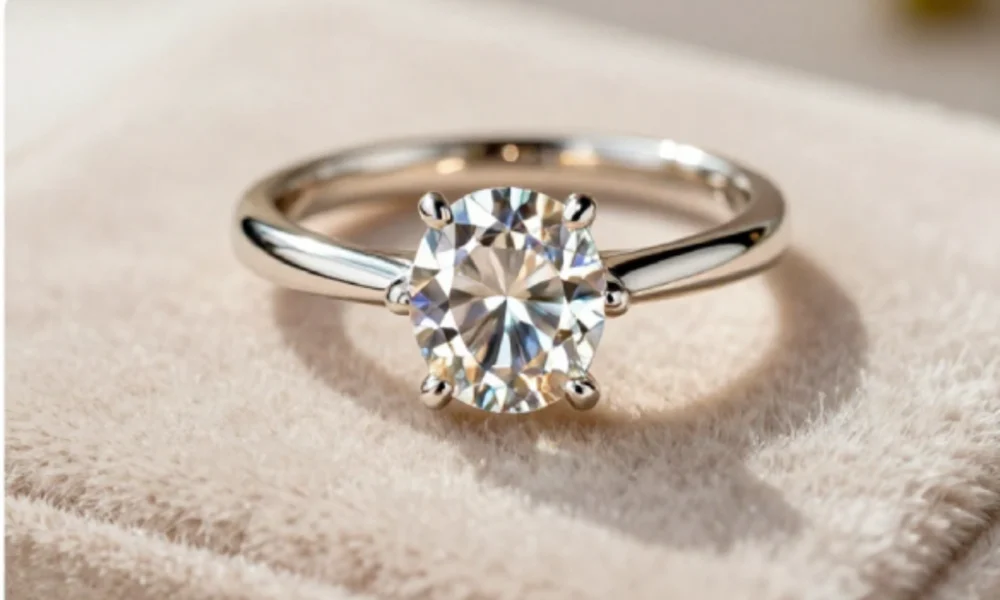
The assumption that custom engagement rings cost more than store-bought options is widespread — and largely wrong. In many cases, designing a ring from scratch with an independent jeweler can cost significantly less than buying a comparable piece off a retail shelf. Understanding why that’s true, and how to make it work in your favor, is the starting point for any smart ring purchase.
Table Of Content
- Why Custom Rings Often Cost Less Than Retail
- What the Average Couple Actually Spends
- How to Avoid Paying More Than Necessary
- Choosing Materials That Match Your Budget
- Smart Stone Grading: Where to Save Without Losing Sparkle
- Designing Around What Matters
- Quality Over Carat Weight
- The Design Process Itself
- Warranties and Long-Term Care
- Is a Custom Ring Right for You?
Why Custom Rings Often Cost Less Than Retail
Retail jewelry stores carry overhead costs that have nothing to do with the ring itself — showroom rent, commissioned sales staff, brand advertising, and multi-tier distribution markups. All of those costs get absorbed into the price you pay at the counter. When you work directly with an independent jeweler or small studio, most of that markup disappears. You’re paying for materials, design, and craftsmanship — not the store’s operating budget.
Big retail brands build in substantial markups to cover showrooms, advertising budgets, and sales commissions, meaning buyers pay for the overhead, not just the ring. Mikado Diamonds Working with a boutique or independent jeweler removes those layers. Online retailers typically charge 40–50% less than brick-and-mortar stores for identical diamonds, because physical stores pass on costs from rent, staff, and showroom maintenance. Lioridiamonds
What the Average Couple Actually Spends
Having a reference point for ring costs helps frame what “budget-friendly” actually means. According to The Knot’s 2024 Jewelry and Engagement Study, the national average cost of an engagement ring is $5,200, and nearly two-thirds of couples spend less than $6,000. The Knot That figure has been dropping steadily — from $6,000 in 2021 to $5,200 in 2024 — as buyers become more selective about where their money goes.
Custom rings can come in well below that average with the right choices. A fully custom ring with a 2-carat lab-grown diamond, solid 14K gold setting, and halo accents can be delivered for under $3,500 — rings that would easily retail for $7,000 or more at a traditional store. Mikado Diamonds
How to Avoid Paying More Than Necessary
Getting a fair price on a custom ring comes down to a few practical steps:
Research jewelers carefully. Look for independent jewelers or small studios with verified reviews and a clear pricing structure. A reputable jeweler will provide an itemized quote — materials, stone, and labor listed separately. Vague “all-in” pricing often conceals inflated line items.
Set your budget before any consultation. Knowing your ceiling before you walk in prevents scope creep and lets the jeweler show you only what fits your parameters. Most experienced jewelers can work within a defined range without sacrificing quality.
Source stones strategically. Some jewelers source gemstones directly from wholesalers or cutters, passing the savings on to clients. Asking how a jeweler sources their stones — and whether you can supply your own — is a legitimate and often productive conversation.
Consider local artisans. Smaller craftspeople frequently offer more personalized service and competitive pricing compared to larger studios or chain retailers. The result is often a more individualized piece at a better value.
Choosing Materials That Match Your Budget
Stone selection is where the largest cost differences occur. In 2025, a lab-grown diamond of comparable size and visual quality to a mined diamond costs significantly less — shoppers spend around $2,600 on average for a lab-grown center stone compared to $6,700 for a natural equivalent. La Bijouterie That gap opens space to increase carat size, upgrade the cut, or put funds toward a more detailed setting without inflating the overall cost.
The average cost of the highest-grade lab-grown diamonds has dropped by $8,613 over the last five years, reaching $5,670 in 2025 — a substantial reduction that can be redirected toward other wedding expenses. BriteCo
For buyers open to gemstones beyond diamonds, options like sapphires, rubies, spinels, and salt-and-pepper diamonds offer strong visual presence at lower price points than comparable diamond stones. Metal choice also matters: platinum carries the highest cost, followed by 18K gold, 14K gold, and rose gold — with 14K white gold offering a practical balance between durability and price.
Smart Stone Grading: Where to Save Without Losing Sparkle
Understanding diamond grading — the GIA’s 4Cs framework of cut, color, clarity, and carat weight — allows buyers to make targeted trade-offs that reduce cost without visible compromise.
Choosing a center stone in the G–H color range with VS2 clarity is considered one of the best values available. These diamonds are near-colorless and eye-clean, yet cost considerably less than stones graded D–F or VVS. Dropping one clarity tier from VS2 to SI1 can reduce the price by up to 20% without any visible difference, especially in smaller carat sizes. La Bijouterie
Cut quality, however, is not a place to economize. A well-cut stone of modest grade will outperform a poorly cut stone of superior grade in terms of light performance and visual impact.
Designing Around What Matters
One practical advantage of custom design is that you only pay for what your partner actually wants. Pre-made rings often include design elements — pave bands, decorative shanks, side stones, branded packaging — that add cost without adding personal meaning. Starting from scratch means allocating the budget toward the elements that genuinely matter and skipping the rest.
Ring settings also create significant visual leverage without major cost increases. Halo and hidden-halo settings can dramatically amplify a center stone’s appearance without increasing its carat weight La Bijouterie — making a smaller stone look considerably larger and more substantial on the hand.
Engraving a date or personal message inside the band adds meaning without adding significant cost. Custom design allows for these personal touches to be built in from the start rather than added as paid afterthoughts.
Quality Over Carat Weight
A common mistake is equating carat weight with overall ring quality. A smaller stone with excellent cut, good color, and clean clarity will typically look more impressive than a larger stone with mediocre grades across the board. Custom design makes it easier to prioritize what actually shows — cut and setting — rather than chasing raw size.
The Design Process Itself
Many couples treat the custom design process as part of the engagement experience. Working with a jeweler through consultations, reviewing computer-aided design (CAD) renders, and approving wax models before production gives both partners visibility into the final result. That process also reduces the risk of disappointment, since the ring is confirmed before it’s cast.
Warranties and Long-Term Care
It’s worth asking any jeweler about aftercare plans, resizing policies, and warranty coverage before committing. Many independent jewelers offer maintenance services — prong checks, cleaning, rhodium replating for white gold — either as part of the purchase or at a nominal cost. These services extend the ring’s lifespan and reduce long-term ownership costs.
Is a Custom Ring Right for You?
Custom engagement rings work best when you have a specific vision, a defined budget, and enough lead time for the design and production process — typically four to eight weeks from initial consultation to delivery. For couples who know what they want and want to avoid paying for brand overhead, the custom route usually delivers better value than retail alternatives.
The national average may sit around $5,200, but with the right jeweler, the right stone choices, and a clear brief, a well-made custom ring can come in at a fraction of that — without looking like it did.