

Game-Based Assessments: A 2026 Guide to Tools, Design, and Data
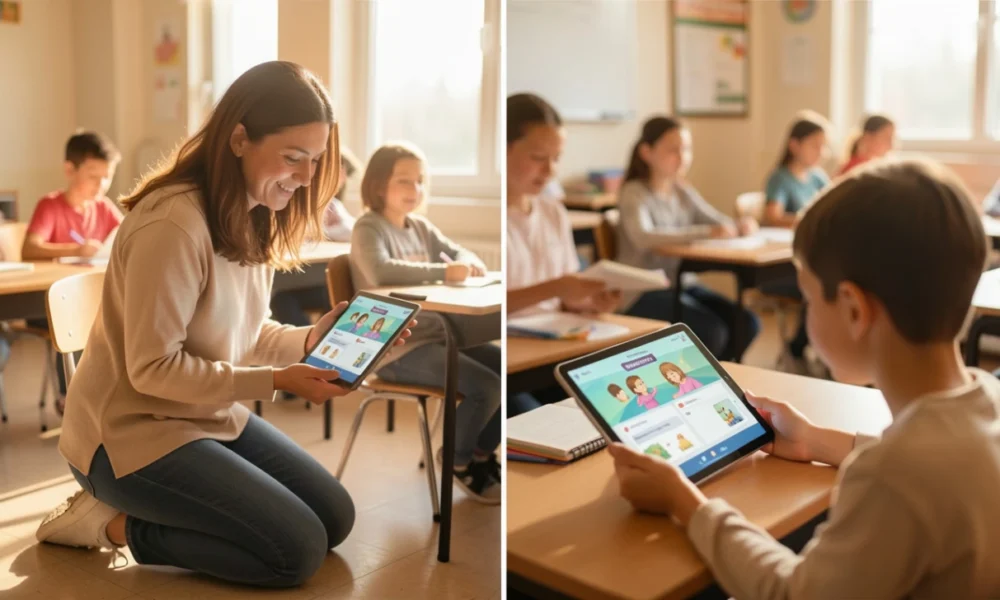
A 2025 survey by Kahoot! found that approximately 70% of teachers observed increased student attention when incorporating game-based lessons into their instruction. This statistic reflects a broader trend: game-based assessments are shifting from a novel engagement tactic to a core component of modern educational and professional evaluation strategies. These tools integrate assessment objectives into interactive gameplay, moving beyond traditional testing methods to capture a more comprehensive picture of a learner’s or candidate’s abilities.
Table Of Content
- What Are Game-Based Assessments?
- Game-Based vs. Gamified Assessments
- How They Work and Why They Are Effective
- Applications Across Education and Industry
- In K-12 and Higher Education
- In Recruitment and Professional Development
- Tp Game-Based Assessment Tools for 2026
- Key Considerations for Implementation
- Data Privacy and Security
- Accessibility and Fairness
- Validity and Reliability
- Conclusion
What Are Game-Based Assessments?
Game-Based vs. Gamified Assessments
While often used interchangeably, “game-based” and “gamified” assessments have distinct meanings
- Game-Based Assessments: These are assessments built from the ground up as complete games. The entire experience is game-like, with puzzles, challenges, and narratives designed to measure specific skills. The assessment data is gathered through the user’s actions and decisions within the game.
- Gamified Assessments: These take a traditional assessment format (like a multiple-choice test) and add game elements to it, such as points, badges, leaderboards, and progress bars. The core structure remains a test, but the experience is made more engaging with game mechanics .
Both approaches aim to increase engagement and reduce the stress often associated with testing, but they achieve this through different structural means.
How They Work and Why They Are Effective
Game-based assessments collect data as the user plays. The software records not only whether an answer is correct but also metrics like response time, problem-solving paths, and decision-making patterns. For example, an adaptive math game might adjust the difficulty of problems in real-time based on a student’s answers, pinpointing their exact level of understanding. This provides immediate feedback to the learner and detailed, actionable data for the teacher.
The effectiveness of these tools is supported by research. Studies cited by platforms like TriviaMaker indicate that game-based assessments can increase content retention by as much as 62% and reduce test-related anxiety by 34% compared to traditional methods . They tap into intrinsic motivation, encouraging persistence and creativity—skills that are difficult to measure with paper tests .
Applications Across Education and Industry
In K-12 and Higher Education
Game-based assessments are used across all grade levels to support both formative and summative evaluation.
- Elementary Education: Tools like Prodigy Math and BlooBooklet engage themes and collectible characters to assess foundational skills in math and reading. Blooket’s variety of game modes, such as Tower Defense and Battle Royale, is particularly effective for maintaining engagement with younger students.
- Secondary Education: Platforms like Quizizz and Gimkit introduce more complex game mechanics. Quizizz allows for self-paced practice with strategic power-ups, while Gimkit adds an economic layer where students earn and invest virtual currency, fostering strategic thinking alongside content mastery. History classes use interactive simulations like “Mission US” to assess understanding of historical events through decision-making.
- Higher Education: University courses are beginning to incorporate game-based elements for assessment. For instance, a module at Aberystwyth University requires students to design and produce an interactive ‘assessment for learning’ game, demonstrating their understanding of assessment principles through creation . Virtual labs in science courses allow students to design experiments, with the system tracking their hypothesis formation and conclusion-drawing skills.
In Recruitment and Professional Development
The corporate world has also adopted game-based assessments to identify talent .
- Re-Employment Testing: Major companies like Unilever, HSBC, and RBS use game-based assessments in their hiring processes to evaluate candidates objectively and at scale. These assessments measure a range of cognitive and emotional skills, including attention, memory, risk-taking (e.g., the Balloon Analogue Risk Task), emotional intelligence, and multitasking ability
- Objective Skill Measurement: Providers like Arctic Shores and Pymetrics create immersive games that help employers identify candidate potential without the bias that can sometimes accompany traditional CV screening . This approach focuses on a candidate’s “style of play” and problem-solving approach rather than just their listed qualifications . Social workplaces and inclusion initiatives are also using these tools to make talent visible in a language-independent, less stressful way .
Tp Game-Based Assessment Tools for 2026
The market for these tools has expanded significantly. The following table summarizes some of the leading platforms available in 2026, based on recent reviews .
| Tol | Best For | Key Gamification Features | Pricing Model |
|---|---|---|---|
| Kahoot! | Live, whole-class quiz games and trivia. | Live leaderboards, music, points, and AI question generation from topics or PDFs. | Free basic version; premium plans (e.g., Kahoot!+ Max) for advanced features. |
| Quizizz | Self-paced gamified practice and homework. | Individual pacing, leaderboards, strategic power-ups, meme integration. | Free tier with limits; paid plans for more features. |
| Blooket | Engaging elementary students (K-5). | Multiple game modes (Tower Defense, Racing), collectible “Blooks” characters. | Free version; premium for enhanced features. |
| Gimkit | Strategy-based competition and deeper engagement. | In-game economy, investment mechanics, and creative themed modes (e.g., Trust No One). | Severely restricted free tier; premium ~$59.88/year. |
| TriviaMaker | Authentic, zero-friction game show experiences. | Eight game show formats (Grid-style, Buzzer rounds), no student login required. | Free unlimited games; premium starts at $6.99/month for analytics. |
| Prodigy | Standards-aligned math practice (elementary/middle school). | Fantasy adventure RPG where math problems drive the storyline. | Free basic access; optional membership for additional features. |
| Quizalize | Adaptive, differentiated learning and detailed analytics. | AI-powered adaptive difficulty, adventure map progression, and mastery dashboard. | Free basic; premium for advanced features and reporting. |
| Edcafe AI | Comprehensive AI-powered quiz creation and grading. | Generates quizzes from any source (text, video, docs), QR code assignments, and automated feedback with rubrics. | Forever-free plan; Pro ($7.99/mo) and Premium ($14.99/mo) plans available. |
Key Considerations for Implementation
Data Privacy and Security
The detailed data collected by game-based assessments requires careful handling. These tools often track click-level data, which can be subject to strict regulations. In the United States, schools must ensure compliance with the Family Educational Rights and Privacy Act (FERPA). In Europe, the General Data Protection Regulation (GDPR) imposes stringent rules on how user data is collected, stored, and processed.
Educators and recruiters should:
- Review the privacy policies of any assessment tool before adoption.
- Understand what data is being collected, who owns it, and how it is protected.
- Ensure the platform offers robust security measures to prevent breaches.
- Be transparent with students or candidates about the data collection process.
Accessibility and Fairness
For an assessment to be valid, it must be fair and accessible to all users. This means considering students with disabilities and those from diverse cultural backgrounds
- Design for All Learners: Look for tools that include features like text-to-speech, adjustable text size, alternative control options, and support for screen readers. The goal is to ensure the game mechanics do not inadvertently create barriers for neurodivergent users or those with physical disabilities .
- Cultural Relevance: Assessment content and game narratives should be reviewed for cultural bias. Characters and scenarios should be inclusive so that all students or candidates can engage with the material .
- Fairness in Recruitment: Using games for hiring should focus on measuring the skills essential for the job. It is important to validate that the game’s metrics are reliable predictors of job performance and do not disadvantage any group of candidates .
Validity and Reliability
For any assessment, the results must be both valid (measuring what they intend to measure) and reliable (producing consistent results). When selecting a game-based tool, it is crucial to look for evidence of these psychometric properties .
- Construct Validity: Does success in the game truly require mastery of the target skill, or can a player succeed through luck or unrelated game knowledge? Well-designed games directly tie gameplay to learning or competency standards.
- Reliability: If a student or candidate played the assessment game multiple times over a short period (with their knowledge unchanged), would they get a similar score? The game’s mechanics should provide stable and consistent measurement.
Conclusion
Game-based assessments represent a significant evolution in how we measure knowledge and skills across both educational and professional landscapes. By blending engaging mechanics with rigorous data collection, they offer a richer, more nuanced view of a person’s abilities than traditional tests alone. When implemented thoughtfully—with careful attention to data privacy, accessibility, and validity—these tools can transform assessment from a source of stress into an integrated, motivating part of the learning and development process.