

Government Incentives for EV Buyers (Global + Region-Based Insight)
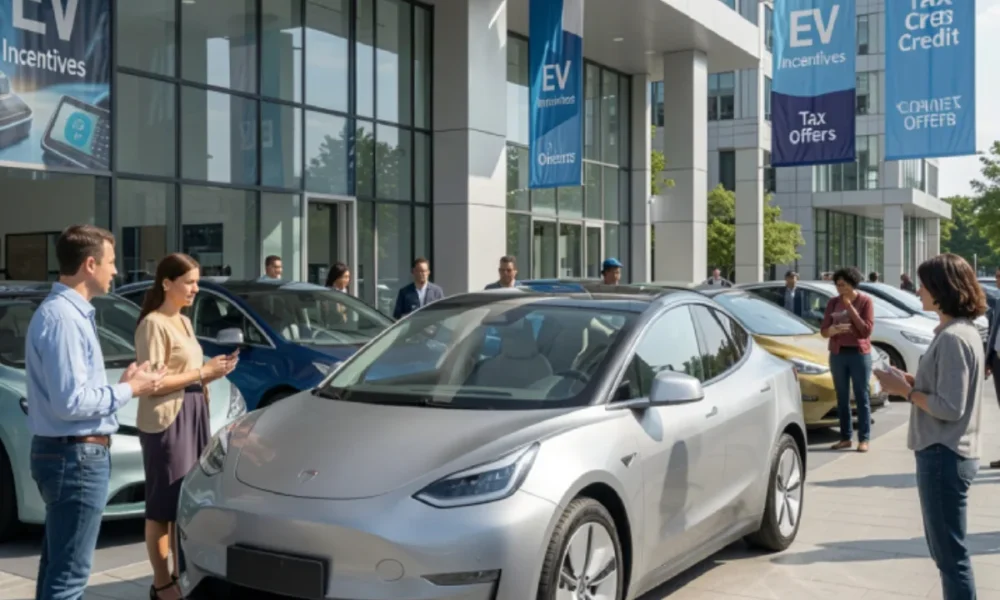
If you are shopping for an electric vehicle, one thing becomes obvious fast: EV pricing is no longer just about the car itself. It is also about where you live, when you buy, and whether your local incentive program is still active.
Table Of Content
- The Big Picture: EV Incentives Have Become More Targeted
- What EV buyers should look at first
- Quick Snapshot: Where EV Buyer Incentives Stand in 2026
- North America: Incentives Now Depend More on Local Reality
- United States
- Canada
- North America takeaway
- Europe: Still Supportive, But Less Uniform Than Before
- France
- United Kingdom
- Europe takeaway
- Asia: Some of the Strongest EV Policy Signals Are Still Here
- China
- India
- Asia takeaway
- Why EV Incentives Matter More Than Ever
- What EV Buyers Should Do Before Making a Decision
- 1. Check the date first
- 2. Check the vehicle rules
- 3. Check whether the support is national or local
- 4. Look beyond the purchase rebate
- 5. Do not build your budget around an old headline
- Final Thoughts
- FAQ
- Are there still government incentives for EV buyers in 2026?
- Does the U.S. still offer a federal EV tax credit in 2026?
- Is Canada still offering a federal EV rebate?
- Which regions still look strong for EV incentives?
- Are EV incentives only about private cars?
- What is the most important thing to check before buying an EV?
That is what makes the current EV market so interesting.
A few years ago, many countries pushed broad national EV rebates. In 2026, the picture looks more mixed. Some governments still offer strong buyer support. Others have reduced direct car subsidies, shifted toward tax relief, or moved support into charging, fleets, and smaller vehicle categories.
So if you are trying to understand government incentives for EV buyers, the real answer is not “yes” or “no.” It is “it depends on your region.”
The Big Picture: EV Incentives Have Become More Targeted
The global EV incentive story has matured.
Instead of handing out the same rebate to almost everyone, many governments are now doing one of three things:
- Keeping incentives, but adding stricter eligibility rules
- Replacing direct rebates with tax exemptions or point-of-sale discounts
- Moving support toward affordable EVs, commercial fleets, charging, and public transport
For buyers, this means the headline offer matters less than the fine print.
What EV buyers should look at first
Before comparing models, check these five things:
- Whether the incentive is still active
- Whether it applies to new EVs, used EVs, or both
- Whether income caps or price caps apply
- Whether battery sourcing or local production rules matter
- Whether the discount comes upfront or later through tax filing
That last point is huge. A rebate you see at checkout feels very different from a credit you may claim later.
Quick Snapshot: Where EV Buyer Incentives Stand in 2026
| Region | Buyer Incentive Trend | What It Means |
|---|---|---|
| North America | More fragmented | Federal support has weakened in some markets, while local and provincial programs matter more |
| Europe | Mixed and evolving | Some countries still support EV buying, but rules and funding models have changed |
| Asia | Still active in key markets | Large markets continue to use tax relief, targeted subsidies, and ecosystem support |
North America: Incentives Now Depend More on Local Reality
North America is no longer a simple “buy EV, get money back” story.
United States
For U.S. buyers, the federal picture changed sharply. According to the IRS, the New Clean Vehicle Credit and the Previously Owned Clean Vehicle Credit are not available for vehicles acquired after September 30, 2025.
That means in 2026, many buyers can no longer rely on the federal EV purchase credit that used to be one of the biggest reasons to go electric.
There is still an important related benefit in the U.S. though: some home EV charger installations may qualify for a tax credit if the equipment is placed in service before July 1, 2026.
What this means for buyers:
The U.S. EV value conversation has shifted away from federal purchase credits and more toward state programs, utility rebates, lease offers, dealer pricing, and charging savings.
Canada
Canada’s federal iZEV program is no longer active for light-duty consumer purchases. Transport Canada announced the program pause in January 2025, and federal reporting shows it officially ended on March 31, 2025.
What this means for buyers:
Canadian EV shoppers in 2026 may still find support at the provincial level, but the national incentive that once helped lower sticker prices is no longer the main story.
North America takeaway
If you are in North America, do not assume there is still a broad federal EV rebate waiting for you. In 2026, the smart move is to check regional programs first and treat national support as limited or expired unless confirmed otherwise.
Europe: Still Supportive, But Less Uniform Than Before
Europe remains important in the EV transition, but buyer incentives now look very different country by country.
France
France made a notable change in 2025. The traditional ecological bonus for new passenger EVs was removed for vehicles ordered from July 1, 2025, and support continued through a different aid structure tied to energy savings certificates.
What this means for buyers:
Support did not fully disappear, but the system changed. Buyers now need to pay closer attention to income conditions, vehicle criteria, and the exact mechanism behind the aid.
United Kingdom
The U.K. brought back direct support through the Electric Car Grant in July 2025. The program offers up to £3,750 for eligible new electric cars, with different levels based on sustainability criteria. In February 2026, the government also increased some EV chargepoint grant support.
What this means for buyers:
The U.K. has become more active again on the buyer side, but eligibility still depends on the approved vehicle list and grant rules.
Europe takeaway
Europe still supports EV adoption, but the easy era of one simple answer is mostly gone. One country may offer a direct car grant, another may focus on tax policy, and another may push charging or lower-emission mobility in a more indirect way.
Asia: Some of the Strongest EV Policy Signals Are Still Here
Asia continues to be one of the most important regions for EV growth, and government incentives remain a major reason why.
China
China still has one of the clearest tax-based buyer support systems. Official tax policy provides full vehicle purchase tax exemption for qualifying new energy vehicles bought in 2024 and 2025. For purchases in 2026 and 2027, the policy shifts to a 50% reduction, subject to a capped tax benefit.
What this means for buyers:
China’s approach gives EV shoppers a more predictable framework than many other markets. The incentive is not disappearing overnight, but it is becoming less generous than the full exemption phase.
India
India’s current support is more targeted than many casual buyers expect. Under PM E-DRIVE, incentives are focused heavily on electric two-wheelers, three-wheelers, selected commercial segments, public transport, and charging infrastructure. The scheme continues through March 31, 2026 for covered categories.
What this means for buyers:
India is still very serious about EV adoption, but support is stronger in mass mobility and commercial-use categories than in a broad private electric car rebate model.
Asia takeaway
In Asia, incentives remain a real force, but they are often tied to national priorities. That may mean affordable mobility, industrial policy, battery strategy, or urban pollution reduction instead of a simple consumer cash bonus for every private car buyer.
Why EV Incentives Matter More Than Ever
At first glance, incentives just look like savings. But they actually do three jobs at once:
- They reduce the upfront price barrier
- They shape which EV categories grow fastest
- They reveal what each government wants the EV market to become
That is why region-based insight matters.
A country offering direct car grants is trying to speed up consumer adoption. A country offering charger support is trying to fix infrastructure gaps. A country backing buses, trucks, or two-wheelers may be trying to solve congestion, air quality, or commercial transport costs first.
In other words, incentives tell a bigger story than pricing alone.
What EV Buyers Should Do Before Making a Decision
If you are actively shopping, here is the smartest way to approach incentives in 2026:
1. Check the date first
Programs expire, pause, and restart all the time. One deadline can completely change the value equation.
2. Check the vehicle rules
Some incentives apply only to approved models, capped price bands, or vehicles meeting sourcing requirements.
3. Check whether the support is national or local
In many places, city, state, provincial, or utility-level support now matters more than national policy.
4. Look beyond the purchase rebate
Charging grants, registration tax breaks, lower running costs, and parking perks can change the real ownership cost.
5. Do not build your budget around an old headline
A lot of EV content online still repeats incentive programs that already changed. Always verify what is active right now.
Final Thoughts
Government incentives for EV buyers still matter, but in 2026 they are no longer one-size-fits-all.
North America looks more fragmented. Europe is still supportive but more policy-heavy and country-specific. Asia continues to show some of the strongest incentive momentum, especially where governments are using EV policy as part of a bigger industrial and mobility strategy.
For buyers, the takeaway is simple: the best EV deal is not just about the model you choose. It is about matching that model to the policy reality in your region.
That is where the real savings are.
FAQ
Are there still government incentives for EV buyers in 2026?
Yes, but they vary a lot by country and region. Some are still active, some have ended, and some now focus on taxes, charging, or specific vehicle categories instead of direct purchase rebates.
Does the U.S. still offer a federal EV tax credit in 2026?
For many buyers, no. The IRS says the New Clean Vehicle Credit and Previously Owned Clean Vehicle Credit are not available for vehicles acquired after September 30, 2025.
Is Canada still offering a federal EV rebate?
Canada’s federal iZEV program was paused in January 2025 and officially ended on March 31, 2025, so buyers now need to look more closely at provincial options.
Which regions still look strong for EV incentives?
Parts of Europe and Asia still show meaningful support, especially where governments use tax relief, direct grants, or targeted mobility incentives.
Are EV incentives only about private cars?
No. In many markets, support now also targets electric buses, trucks, two-wheelers, three-wheelers, charging infrastructure, and fleet adoption.
What is the most important thing to check before buying an EV?
Check whether the incentive is active on your purchase date and whether your exact vehicle qualifies.