

Hidden Technology in Modern Cars Most Drivers Don’t Realize They Use
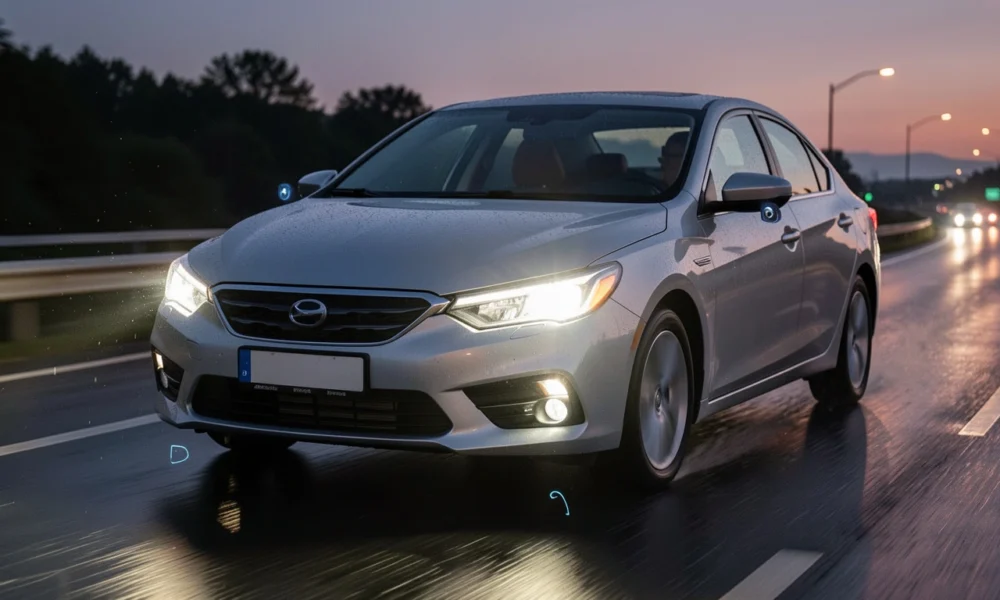
Modern cars are packed with technology most drivers never think about. Every time you brake on a slippery road, merge on a highway, or park in a tight spot, multiple invisible systems are making decisions faster than you can react. Understanding this hidden technology in modern cars helps you use your vehicle more confidently — and choose the right features when buying your next one.
Table Of Content
- What “Hidden Car Technology” Actually Means
- The Sensor Network Running Beneath Your Car’s Surface
- Hidden Technology in Modern Cars: Safety Systems Explained
- 1. Automatic Emergency Braking (AEB)
- 2. Electronic Stability Control (ESC)
- 3. Lane-Keeping Assist
- How Your Car Thinks About Traction
- 1. Traction control
- 2. Torque vectoring
- The Software Managing Your Engine (That You’ll Never See)
- Adaptive Systems That Learn Your Driving Conditions
- What Drivers Often Get Wrong About These Systems
- Why This Matters When Buying a Car
- FAQs
- Do all new cars have automatic emergency braking?
- Can I turn off systems like ESC or traction control?
- Do these systems require maintenance?
- What happens if a sensor fails?
- Are hidden car technologies reliable?
What “Hidden Car Technology” Actually Means
Most people think of car technology as touchscreens, Bluetooth, or backup cameras. Those are the visible parts. Hidden car technology refers to the embedded systems, sensors, and software working in the background — systems you never directly interact with but rely on constantly.
These aren’t optional extras on high-end vehicles anymore. Many of them are now standard across mid-range and even entry-level cars sold in most markets.
The Sensor Network Running Beneath Your Car’s Surface
Your car is covered in sensors you’ve probably never noticed. Radar units sit behind the front bumper. Ultrasonic sensors line the front and rear fascia. Cameras are embedded near the rearview mirror, side mirrors, and sometimes the door handles.
Together, these sensors feed data to a central processing unit dozens of times per second. That data drives systems like automatic emergency braking, lane departure warnings, and blind-spot monitoring. You don’t see any of this happening — you just feel the result when the car slows itself or vibrates the steering wheel.
Hidden Technology in Modern Cars: Safety Systems Explained
1. Automatic Emergency Braking (AEB)
AEB uses radar and camera data to detect objects in your path. If you’re approaching a vehicle, pedestrian, or obstacle too quickly and haven’t responded, the system applies the brakes automatically. Some versions can bring the car to a full stop.
This system operates entirely without driver input. It doesn’t ask permission — it simply acts when it calculates a collision is about to happen.
2. Electronic Stability Control (ESC)
ESC is one of the most important pieces of technology in any modern car, and most drivers have never heard of it. The system monitors wheel speed, steering angle, and lateral acceleration simultaneously. When it detects the car is starting to slide or spin, it applies braking force to individual wheels to bring the vehicle back in line.
You won’t feel ESC working unless you’re near the edge of traction. On a slippery road or during a sudden swerve, it can prevent a skid from becoming a crash.
3. Lane-Keeping Assist
Lane-keeping systems use the front-facing camera to read road markings. When the car drifts toward a lane boundary without a turn signal, the system either steers the car back or vibrates the wheel to alert you.
More advanced versions — called lane-centering assist — steer continuously to keep the car in the middle of the lane. These systems are now standard on many new vehicles, including affordable family sedans.
How Your Car Thinks About Traction
Modern cars don’t just send power to the wheels and hope for the best. They manage traction through several interconnected systems that most drivers never think about.
1. Traction control
Traction control monitors wheel spin during acceleration. If one wheel starts spinning faster than the others — a sign it’s lost grip — the system reduces engine power or brakes that specific wheel until traction is restored. You might notice the traction control light flicker on a wet road. That’s the system doing exactly what it’s designed to do.
2. Torque vectoring
Torque vectoring goes a step further. Found on performance and all-wheel-drive vehicles, this technology actively shifts torque between individual wheels to improve cornering and stability. The car is effectively steering itself through the distribution of power — something no driver could replicate manually.
The Software Managing Your Engine (That You’ll Never See)
Your car’s engine is controlled by an Engine Control Unit (ECU) — a computer that adjusts hundreds of variables in real time. Fuel injection timing, air-fuel mixture, valve timing, ignition timing — the ECU manages all of these based on sensor readings taken thousands of times per second.
When you press the accelerator, you’re not directly controlling any of those processes. You’re telling the ECU what you want, and the ECU decides how to deliver it. This is why modern engines are so much more fuel-efficient and reliable than older ones: the software is constantly fine-tuning performance in ways that were impossible with mechanical systems alone.
Adaptive Systems That Learn Your Driving Conditions
Some hidden technologies are adaptive — they change their behavior based on conditions or driver input.
- Adaptive cruise control doesn’t just hold a set speed. It uses radar to track the vehicle ahead and automatically adjusts your speed to maintain a safe gap. If traffic slows, the system slows with it. Some versions can bring the car to a complete stop and then resume when traffic moves.
- Adaptive headlights swivel in the direction of steering input, illuminating curves before you’ve turned into them. Traditional headlights point straight ahead. Adaptive systems move with the road, giving you light where you’re actually going.
- Rain-sensing wipers use an optical sensor on the windshield to detect moisture. When rain starts, the wipers activate automatically and adjust their speed to match rainfall intensity. You set them once and forget about them.
What Drivers Often Get Wrong About These Systems
Many drivers assume these technologies mean the car can handle any situation without their involvement. That’s a misconception worth correcting.
AEB reduces collision severity but can’t always prevent one entirely — especially at high speeds or in poor visibility. Lane-keeping assist can be confused by faded road markings, snow, or construction zones. ESC can manage a certain amount of instability, but it can’t overcome the limits of physics.
These systems are designed to assist, not replace, attentive driving. They work best when the driver is engaged, and the systems are properly maintained — including keeping sensors clean and uncovered in winter weather.
| Technology | What It Does | Common Limitation |
|---|---|---|
| Automatic Emergency Braking | Applies brakes to avoid a collision | Less effective at high speeds |
| Electronic Stability Control | Prevents skids and spins | Can’t exceed traction limits |
| Adaptive Cruise Control | Matches speed to traffic flow | May not detect all vehicle types |
| Lane-Keeping Assist | Corrects drift out of lane | Struggles with faded markings |
| Torque Vectoring | Distributes power between wheels | Mostly on performance/AWD models |
Why This Matters When Buying a Car
Understanding what’s actually in a vehicle helps you ask better questions at the dealership. Two cars in the same price range can have very different safety technology packages. Some automakers include AEB and lane-keeping assist as standard features. Others put them in option packages or only offer them on higher trims.
When comparing vehicles, check which driver-assistance technologies come standard, which require an upgrade, and whether the systems in question have been tested and rated by organizations like NHTSA or Euro NCAP. A car’s safety rating often reflects how well these hidden systems perform in real-world scenarios.
FAQs
Do all new cars have automatic emergency braking?
In many markets, AEB has become a requirement for new vehicles, or it’s standard on most trims. However, the quality and capability of AEB systems vary by manufacturer and model. Always verify what’s included in the specific trim you’re purchasing.
Can I turn off systems like ESC or traction control?
Most cars allow you to temporarily disable traction control, and some allow partial ESC deactivation. However, ESC typically reactivates automatically above certain speeds because the risk without it is too high. Disabling these systems is generally not recommended for everyday driving.
Do these systems require maintenance?
Yes. Cameras and sensors can become blocked by dirt, ice, or debris. After any collision repair involving bumpers or windshields, these systems often require professional recalibration to work correctly.
What happens if a sensor fails?
Most systems display a warning light on the dashboard and deactivate the affected function. The car remains drivable, but you lose that layer of assistance until the sensor is repaired or replaced.
Are hidden car technologies reliable?
They are generally reliable under normal conditions. Their performance can degrade in extreme weather, poor visibility, or when sensors are damaged. Regular maintenance and keeping sensors clean extend their reliability significantly.