

Himalayan Travel Guide: Spiritual Sites, Trekking, Wildlife, Food & Sustainable Tourism
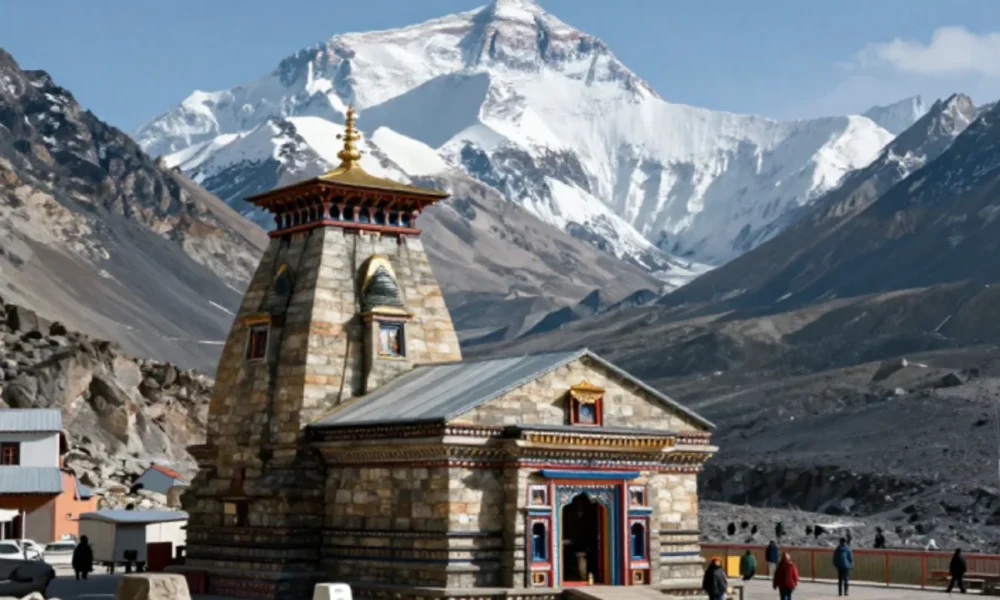
Himalayan Travel Guide: Spiritual Sites, Trekking, Wildlife, Food & Sustainable Tourism. The Himalayas stretch across five countries — India, Nepal, Bhutan, China, and Pakistan — forming the world’s highest mountain range and one of the most diverse travel destinations on earth. Whether you are drawn by pilgrimage routes, high-altitude trekking, rare wildlife, or the simplicity of a mountain village, this guide covers what to expect and how to plan a visit that respects both the landscape and the communities within it.
Table Of Content
- The Himalayas: Geography and Countries
- Sacred Sites and Pilgrimage Destinations
- Kedarnath Temple, Uttarakhand
- Mount Kailash and Kora Circuit, Tibet
- Lumbini, Nepal
- Hemkund Sahib and the Valley of Flowers, Uttarakhand
- Boudhanath and Pashupatinath, Kathmandu Valley
- Trekking in the Himalayas
- Best Trekking Seasons
- Annapurna Circuit, Nepal
- Everest Base Camp Trek, Khumbu Region, Nepal
- Langtang Valley Trek, Nepal
- Great Himalayan Trail and Regional Routes, India
- Altitude Sickness and Acclimatization
- Lakes and Natural Landmarks
- Pangong Tso, Ladakh
- Gurudongmar Lake, Sikkim
- Valley of Flowers National Park, Uttarakhand
- Wildlife
- Accommodation Options
- Teahouse Trekking
- Homestays in Himalayan Villages
- Luxury Mountain Resorts
- Camping
- Himalayan Cuisine
- Momos
- Thukpa
- Dal Bhat
- Butter Tea (Po Cha)
- Sustainable Tourism and Environmental Concerns
- Glacier Retreat and Climate Change
- Responsible Travel Practices
- Practical Planning Tips
The Himalayas: Geography and Countries
Spanning over 2,400 kilometers, the Himalayan range includes more than 15,000 glaciers and contains many of the world’s highest peaks, including Mount Everest (8,849 m), Kangchenjunga, and Annapurna. The range forms a natural boundary between the Indian subcontinent and the Tibetan Plateau and feeds ten of Asia’s major river systems, including the Ganges, Brahmaputra, and Indus, supplying water to an estimated 1.6 billion people across South Asia.
Each country within the range offers a distinct experience. Nepal provides access to the Khumbu region and Annapurna Circuit. India’s Himalayan states — Uttarakhand, Himachal Pradesh, Ladakh, and Sikkim — hold some of the range’s most significant pilgrimage sites. Bhutan manages tourism carefully through its high-value, low-impact approach. Tibet (China) is home to Mount Kailash and the Tibetan Plateau. Pakistan’s Karakoram and Hindu Kush ranges attract serious mountaineers.
Sacred Sites and Pilgrimage Destinations
Kedarnath Temple, Uttarakhand
Kedarnath Temple stands at 3,583 meters in the Garhwal Himalayas of Uttarakhand, India. One of the twelve Jyotirlinga shrines dedicated to Lord Shiva, the stone structure is believed to date back over a thousand years. The temple forms part of the Char Dham Yatra, a pilgrimage circuit that draws hundreds of thousands of devotees each year between May and October, when the temple is open. The approach requires either a 16-kilometer trek from Gaurikund or a helicopter flight.
Mount Kailash and Kora Circuit, Tibet
Mount Kailash (6,638 m) in Tibet is considered sacred across four religions: Hinduism, Buddhism, Jainism, and Bon. Pilgrims from across Asia undertake the kora — a circumambulation of the mountain spanning approximately 52 kilometers — as an act of spiritual devotion. The Tibet Autonomous Region requires a special Tibet Travel Permit for foreign visitors, and access is managed through authorized tour operators.
Lumbini, Nepal
Lumbini in the Terai region of Nepal is the birthplace of Siddhartha Gautama, who became the Gautama Buddha. Designated a UNESCO World Heritage Site, Lumbini’s sacred garden contains the Maya Devi Temple, the Ashoka Pillar (erected by the Mauryan emperor Ashoka in 249 BCE), and a growing number of monasteries built by Buddhist communities from countries worldwide. The site is open year-round, though the cooler months between October and March are most comfortable for visiting.
Hemkund Sahib and the Valley of Flowers, Uttarakhand
Hemkund Sahib, situated at 4,329 meters, is the highest Gurudwara (Sikh place of worship) in the world. It shares a trailhead with the Valley of Flowers National Park — a UNESCO World Heritage Site — making the two destinations a natural pairing for visitors. The trail is accessible between June and October.
Boudhanath and Pashupatinath, Kathmandu Valley
For travelers beginning or ending a Himalayan trip in Kathmandu, Boudhanath Stupa and Pashupatinath Temple are significant stops. Boudhanath is among the largest Buddhist stupas in the world and serves as a center of Tibetan Buddhism in exile. Pashupatinath, on the banks of the Bagmati River, is one of the most sacred Hindu temples dedicated to Lord Shiva, and is listed as a UNESCO World Heritage Site.
Trekking in the Himalayas
Best Trekking Seasons
Spring (March to May) and autumn (September to November) are the preferred trekking seasons, offering stable weather, clear skies, and milder temperatures. Snow should still be expected at higher elevations, and travelers should always prepare for sudden weather changes. Exodus
Annapurna Circuit, Nepal
The Annapurna Circuit is one of the most varied long-distance treks in the range. Over 12–18 days, the route passes through subtropical forest, terraced farmland, Gurung and Manangi villages, and high-altitude desert before crossing Thorong La Pass at 5,416 meters. The trail descends into the Mustang region toward Muktinath, a site sacred to both Hindus and Buddhists. The circuit suits fit trekkers with prior experience at altitude.
Everest Base Camp Trek, Khumbu Region, Nepal
The EBC trek reaches 5,364 meters and passes through Sherpa villages including Namche Bazaar, Tengboche (home to Thyangboche Monastery), Dingboche, and Lobuche. The route typically takes 12–14 days from Lukla. The Kala Patthar viewpoint (5,644 m) provides a closer view of Everest’s summit pyramid than Base Camp itself.
Langtang Valley Trek, Nepal
Langtang offers a quieter alternative to the Everest and Annapurna regions. The route passes through rhododendron and oak forest, Tamang villages, and up to the sacred lakes of Gosainkunda at 4,380 meters. The trek can be completed in 7–10 days and is accessible from Kathmandu.
Great Himalayan Trail and Regional Routes, India
In India, the Garhwal Himalayan region offers the Gangotri–Gaumukh trek to the source of the Ganges on the Gangotri Glacier, the Kedarkantha winter trek in Uttarkashi, and the Roopkund Trek — a high-altitude route that leads to a glacial lake with a notable archaeological history. In Ladakh, the Markha Valley Trek and the Chadar Trek (a winter crossing of the frozen Zanskar River) attract experienced high-altitude trekkers.
Altitude Sickness and Acclimatization
Acute Mountain Sickness (AMS) is a genuine risk above 2,500 meters. Symptoms include headache, nausea, fatigue, and loss of appetite. The standard protocol is to ascend no more than 300–500 meters per day above 3,000 meters, with at least one rest day every three days. Diamox (acetazolamide) is commonly used as a preventive measure but should be discussed with a doctor before departure. Descend immediately if symptoms of High Altitude Pulmonary Edema (HAPE) or High Altitude Cerebral Edema (HACE) appear.
Lakes and Natural Landmarks
Pangong Tso, Ladakh
Pangong Tso is a 134-kilometer-long high-altitude lake that straddles the India–China border, with about 40% of the lake falling on the Indian side in Ladakh. Situated at 4,225 meters, the lake changes color across the day depending on light and sediment, shifting from deep blue to turquoise. Overnight stays are available in camps along the Indian shore.
Gurudongmar Lake, Sikkim
At 5,430 meters, Gurudongmar Lake is one of the highest freshwater lakes in the world. The lake is considered sacred by both Buddhists and Sikhs. Indian nationals require a restricted area permit to visit; foreign nationals have additional permit requirements. The nearest town is Lachen, approximately 65 kilometers away.
Valley of Flowers National Park, Uttarakhand
Open from June to October, the Valley of Flowers covers roughly 87 square kilometers of alpine meadow at 3,352–3,658 meters in the Garhwal Himalayas. Over 300 species of wildflowers bloom during the monsoon months, including Brahma Kamal (Saussurea obvallata), the state flower of Uttarakhand and a plant of religious significance.
Wildlife
The Himalayas support a range of high-altitude species that are rarely seen elsewhere.
The snow leopard (Panthera uncia) is found across the range at elevations between 3,000 and 5,000 meters. Hemis National Park in Ladakh has one of the highest densities of snow leopards in the world and is a recognized destination for guided snow leopard spotting expeditions during winter months.
The red panda (Ailurus fulgens) inhabits temperate broadleaf and mixed forests between 2,200 and 4,800 meters across Nepal, Sikkim, Arunachal Pradesh, and Bhutan. It is classified as Endangered on the IUCN Red List.
Other notable species include the Himalayan tahr, blue sheep (bharal), Tibetan antelope (chiru), musk deer, and the Himalayan monal pheasant (Lophophorus impejanus), the national bird of Nepal.
Accommodation Options
Teahouse Trekking
On major trekking routes in Nepal, teahouses provide basic rooms with a bed, blankets, and meals. Standards have improved significantly over the past decade; many now offer hot showers and Wi-Fi, particularly in the Khumbu and Annapurna regions. Booking ahead is advisable during peak season (October and April).
Homestays in Himalayan Villages
Staying with local families in villages in Ladakh, Spiti, Sikkim, or rural Nepal provides an unmediated look at daily mountain life, local food, and traditional architecture. Many homestay networks are community-run, and income goes directly to host families.
Luxury Mountain Resorts
Properties in Shimla, Mussoorie, Gangtok, and the foothills of Bhutan combine high-altitude settings with premium amenities including wood-heated rooms, spa services using locally sourced herbs, and mountain-facing dining. These tend to fill quickly during peak autumn and spring windows.
Camping
Camping is the default accommodation on remote routes such as the Pin Parvati Pass Trek, the Great Himalayan Trail, and winter expeditions in Ladakh. Organized camping operators handle permits, equipment, and meals. Independent camping may require permits in protected areas and national parks.
Himalayan Cuisine
Momos
Momos are steamed or fried dumplings filled with vegetables, chicken, buffalo, or yak meat. Originally Tibetan in origin, they are now ubiquitous across Nepal, Sikkim, Ladakh, and the hill towns of north India. They are typically served with a fermented tomato or sesame-based chutney.
Thukpa
Thukpa is a Tibetan-origin noodle soup prepared with broth, seasonal vegetables, and sometimes meat, spiced with ginger, garlic, and dried chili. It is a practical, warming meal at altitude and is widely available at teahouses and dhabas throughout the range.
Dal Bhat
Nepal’s staple meal — steamed rice served with lentil soup (dal), vegetable curry, and pickled condiments — is the fuel of most Himalayan trekkers. On Nepal’s trekking routes, dal bhat is often offered with unlimited refills.
Butter Tea (Po Cha)
Po cha is a salted tea prepared with brewed tea leaves, yak butter, and salt. It is calorie-dense and widely consumed in Tibet, Ladakh, and Bhutan as a practical defense against cold and altitude. The flavor is markedly different from sweet tea and takes some adjustment for most first-time visitors.
Sustainable Tourism and Environmental Concerns
Glacier Retreat and Climate Change
The glaciers of the Himalayas feed ten of Asia’s major rivers and supply water to over 1.6 billion people. Recent regional modelling studies indicate that if global temperatures rise by 1.5°C, one-third of Himalayan glaciers could vanish by 2100, and at 2°C warming, two-thirds could disappear. Ncl
The Gangotri Glacier — one of the primary sources of the Ganges — has been retreating at approximately 12 meters per year between 2005 and 2017. Ecology & Society As glaciers lose mass, they leave behind unstable moraines and newly formed glacial lakes, which can produce Glacial Lake Outburst Floods (GLOFs) — sudden, destructive floods posing direct hazards to trails, bridges, villages, and lodges. Eve Holidays
Classic trekking windows of spring and autumn still generally offer the best conditions, but timing and intensity of rainfall and storms have become less predictable. Route safety can change quickly as previously stable glacier crossings or moraine paths become impassable. Eve Holidays
Responsible Travel Practices
The Annapurna Conservation Area Project (ACAP), managed by the National Trust for Nature Conservation in Nepal, is one of the longest-running examples of community-based conservation in the Himalayas. The project has established micro-hydro power plants, reforestation programs, and trained local residents as guides and conservation monitors.
Travelers can meaningfully reduce their footprint by staying in locally owned guesthouses and teahouses, hiring local licensed guides and porters, carrying out all non-biodegradable waste from trails, using refillable water bottles with purification tablets or filters, and avoiding single-use plastics in areas where waste management infrastructure is limited.
Bhutan’s tourism model — which requires visitors to book through licensed tour operators and pay a daily Sustainable Development Fee — is explicitly designed to limit volume and generate revenue for conservation and community programs.
Practical Planning Tips
Permits. Most restricted trekking areas in Nepal require a TIMS (Trekkers’ Information Management System) card and a Conservation Area or National Park permit. Indian nationals and foreign nationals have different permit requirements in Ladakh, Sikkim’s restricted zones, and Arunachal Pradesh. Tibet requires a Tibet Travel Permit and, for most regions, additional military area permits.
Best time to visit. October to early November offers the clearest post-monsoon skies and stable temperatures across most of the range. March to May is the spring window, with rhododendrons in bloom at lower elevations. Winter (December to February) closes many high passes but opens specialized experiences such as the Chadar Trek and snow leopard spotting in Ladakh.
Travel insurance. Any policy covering high-altitude trekking should include helicopter evacuation cover. Standard travel insurance typically excludes rescue at altitude without a specific high-altitude or adventure sports clause.
Health precautions. In addition to AMS management, travelers should confirm vaccinations for typhoid, hepatitis A and B, and routine shots before departure. Water purification is essential on all trails.
Currency and connectivity. ATMs are available in Kathmandu, Pokhara, Leh, Gangtok, and other larger towns but are often absent on remote trekking routes. Carry sufficient cash before heading into the hills. Mobile connectivity is available in many teahouse areas through Nepali and Indian SIM cards, though coverage is inconsistent at high elevation.