

How to Choose Curtains for Your Home: A Complete Buying Guide
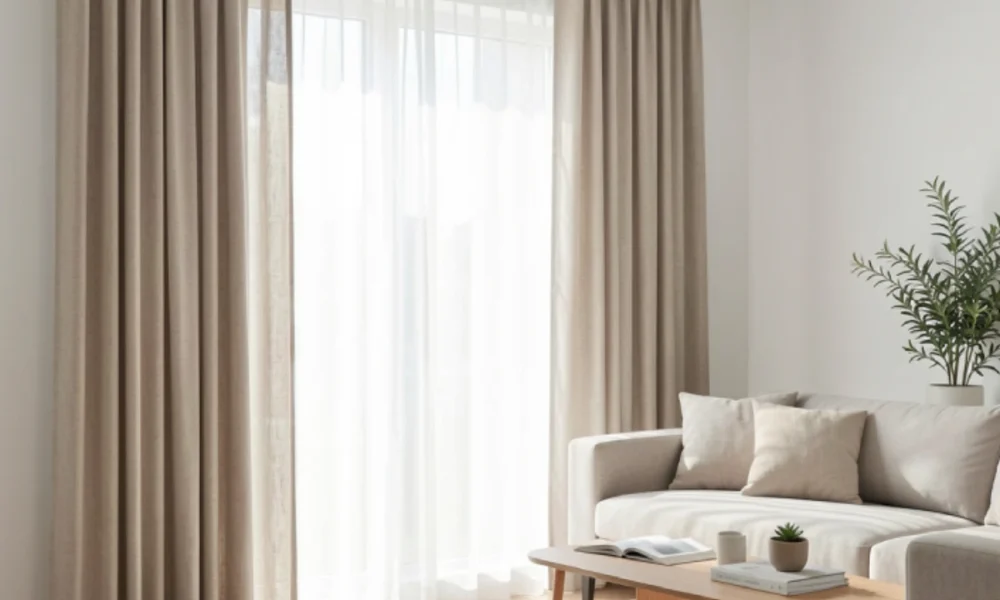
How to Choose Curtains for Your Home? Curtains influence how a room feels more than most people expect. The wrong choice can make a bright space feel heavy, or leave a cozy room looking unfinished. Getting it right requires balancing aesthetics with practical needs — from how much natural light you want to filter, to how easy the panels are to clean. This guide covers every factor worth considering before you buy.
Table Of Content
- Understand the Room’s Purpose First
- Measure Your Windows Accurately
- Choose the Right Curtain Fabric
- Identify the Curtain Header Style
- Select the Right Curtain Hardware
- Light Control and Blackout Options
- Choose Color and Pattern Thoughtfully
- Match Curtain Style to Room Aesthetic
- Plan for Maintenance
- Quick Reference: Curtain Selection Checklist
Understand the Room’s Purpose First
Before evaluating fabric swatches or browsing curtain styles, think about how the room is actually used. A bedroom demands different window treatments than a kitchen or a home office. In bedrooms, blocking light and maintaining privacy are usually the top priorities. In living rooms, the balance between natural light and comfort matters more. Dining rooms and kitchens often benefit from lighter, easy-care fabrics that resist moisture and cooking odors.
Also consider who uses the room. Households with young children or pets have different requirements than a formal sitting room — durability, machine-washability, and resistance to snags become more relevant in active spaces.
Measure Your Windows Accurately
Accurate measurements are the foundation of any curtain purchase. Poorly sized curtains — too short, too narrow, or hung too low — are one of the most common decorating mistakes.
Width: Measure the width of the window frame, then multiply by 1.5 to 3 to get the total fabric width needed for proper fullness. Curtain panels that are too narrow look flat and sparse when closed.
Length: Decide where you want the curtain to fall before you measure. Common options include:
- Sill length — panels end at the window sill; suited to kitchens and small windows.
- Apron length — panels hang 4–6 inches below the sill; a practical choice for rooms with radiators or furniture positioned under windows.
- Floor length — panels just graze the floor; the most widely used option for living rooms and bedrooms.
- Puddle length — panels extend several inches onto the floor for a formal, dramatic effect.
Rod placement: Mount the curtain rod 4–6 inches above the window frame, or closer to the ceiling if you want to make the room feel taller. Extend the rod 6–12 inches beyond the frame on each side so the panels stack off the glass when open, allowing maximum light.
Choose the Right Curtain Fabric
Fabric determines how curtains hang, how much light they let through, and how much maintenance they require. Each material behaves differently on the rod and reads differently from across the room.
| Fabric | Light Control | Best For | Care |
|---|---|---|---|
| Sheer / Voile | Minimal | Living rooms, layering | Machine wash, gentle |
| Cotton | Light to moderate | Any room | Machine washable |
| Linen | Light to moderate | Casual, relaxed spaces | Hand wash or dry clean |
| Velvet | Heavy | Formal living rooms, bedrooms | Dry clean recommended |
| Polyester | Variable | High-traffic rooms, kitchens | Machine washable |
| Silk / Faux Silk | Moderate | Formal rooms | Dry clean |
| Brocade / Damask | Heavy | Traditional, formal settings | Dry clean |
Sheer fabrics let natural light pass through while softening it — they work well layered with heavier panels on a double curtain rod, giving you control over both light and privacy throughout the day. Velvet and lined drapery provide thermal insulation; according to widely cited home design sources, professionally lined drapery can reduce window heat loss by 40–60% when closed, making it a practical choice in colder climates.
If UV protection is a concern, look for fabrics with a UV-resistant lining. Direct sun exposure can degrade fabric along the window-facing edges over time, particularly with silk and some cotton weaves.
Identify the Curtain Header Style
The header — the top of the curtain panel — controls how the fabric gathers and hangs. It also contributes significantly to the overall visual style of the window treatment.
- Grommet / Eyelet headers produce clean, evenly spaced folds and work well in contemporary or casual interiors. The rod is visible through the rings.
- Rod pocket headers create a gathered, slightly ruffled look. Best for lightweight fabrics and informal rooms.
- Pinch pleat / French pleat headers give a tailored, traditional appearance with fuller folds. Common in formal settings.
- Back tab / hidden tab headers conceal the hardware and create a smooth wave when the curtain hangs.
- Tab top and tie top headers expose the rod deliberately and suit relaxed, casual aesthetics like farmhouse or bohemian interiors.
The more pleats a header has, the more formal the curtain tends to look. If your home has a casual feel, a single-pleat or grommet style is usually the better match.
Select the Right Curtain Hardware
Curtain rods and brackets are functional and decorative at the same time. Choosing hardware that is too lightweight for the fabric, or a finish that clashes with the rest of the room, undermines the overall result.
Rod weight capacity: Heavy fabrics like velvet or lined drapery require thicker, sturdier rods with robust wall brackets. Tension rods are only appropriate for lightweight sheers in small windows where no drilling is preferred.
Single vs. double rods: A double curtain rod allows you to hang sheer panels behind heavier drapes, giving you flexibility in light control and layering. This is one of the most practical setups for living rooms and bedrooms.
Finish coordination: Match the rod finish to other metal elements in the room — door handles, light fixtures, or furniture hardware. Common finishes include matte black, brushed brass, brushed nickel, and bronze. As a general rule, a matte finish pairs well with warmer-toned fabrics, while polished or brushed finishes suit cooler palettes.
Finials: For grommet, tab top, or tie top curtains where the rod is visible, choose finials that are attractive in their own right — they become a design element.
Light Control and Blackout Options
Light control is one of the primary functional reasons people buy curtains, and the category has become more specific over time.
- Sheer curtains filter light without blocking it; they provide daytime privacy from the street but are not effective at night.
- Light-filtering curtains soften incoming light while maintaining a bright feel. Good for living rooms and home offices.
- Room-darkening curtains block most but not all light. Suitable for bedrooms where some morning light is acceptable.
- Blackout curtains are made with densely woven or coated fabric that blocks virtually all light. The most effective option for shift workers, nurseries, or home theaters.
If full blackout performance is needed but you want a decorative fabric, adding a separate blackout lining to any curtain panel is an option many custom curtain suppliers offer.
Choose Color and Pattern Thoughtfully
Color and pattern in curtains carry a lot of visual weight because panels cover a large portion of the wall. The choice affects how large, bright, or balanced the room feels.
For neutral rooms: A bold or patterned curtain can serve as the room’s focal point. Solid-colored curtains in a richer tone — deep navy, forest green, warm terracotta — add depth without competing with existing décor.
For rooms with existing patterns or color: Solid, understated curtain panels in a color pulled from the room’s palette tend to create a more cohesive result.
For small rooms: Light-colored curtains hung close to the ceiling and extending wide of the window frame make the space feel taller and more open. White, ivory, and soft linen tones are reliable choices.
Before committing: Order fabric samples and pin them to the wall near the window. Observe how the color reads at different times of day — morning light, midday sun, and artificial evening lighting can all shift the apparent color significantly. This step is particularly important with warmer hues or complex patterns.
Match Curtain Style to Room Aesthetic
The curtain style should be consistent with the room’s overall interior direction:
- Contemporary and minimalist rooms suit clean-lined grommet or back-tab panels in solid, muted tones. Floor-length panels with little or no puddle are typical.
- Traditional and formal rooms work well with pinch-pleat or goblet-pleat drapery in silk, brocade, or velvet, often with a decorative valance.
- Casual, relaxed interiors — farmhouse, coastal, or bohemian — suit linen, cotton, or sheer fabrics with tab-top or tie-top headers.
- Eclectic spaces can incorporate patterned panels like ikat, geometric, or botanical prints as a design statement.
Custom curtains are worth considering if your windows are non-standard sizes, or if you want a fabric and header combination that ready-made options don’t offer. Many online curtain suppliers now offer made-to-measure panels at accessible price points.
Plan for Maintenance
Maintenance requirements vary considerably across fabric types, and they matter more in some rooms than others.
Polyester blends are the most practical choice for high-traffic rooms like kitchens, playrooms, or children’s bedrooms — most are machine washable and hold their shape well after repeated cleaning. Cotton and linen require more care; they may need steaming after washing to restore their appearance. Velvet, silk, and brocade typically require professional dry cleaning, which adds to the long-term cost of ownership.
In rooms where dust and allergens accumulate quickly, choosing machine-washable fabrics and washing them every few months can help maintain indoor air quality. Regular vacuuming with a soft brush attachment extends the time between full washes for most fabric types.
Quick Reference: Curtain Selection Checklist
Before purchasing curtains, confirm the following:
- Window width and height measured accurately
- Rod placement height decided
- Total panel width calculated (window width × 1.5 to 3)
- Curtain length style selected (sill, apron, floor, or puddle)
- Fabric chosen based on room function and light needs
- Header style selected to match interior aesthetic
- Hardware finish chosen to coordinate with room metal tones
- Fabric samples tested under the room’s natural and artificial lighting
- Maintenance requirements align with household routine
Choosing curtains involves more decisions than most people anticipate, but working through each factor methodically produces a result that looks intentional and performs well over time. Taking accurate measurements, testing fabric samples in the actual light conditions of the room, and matching hardware to the curtain weight are the steps most likely to determine whether the final result works or needs to be redone.