

How to Write a Children’s Book Manuscript: Tips for Every Stage of the Process
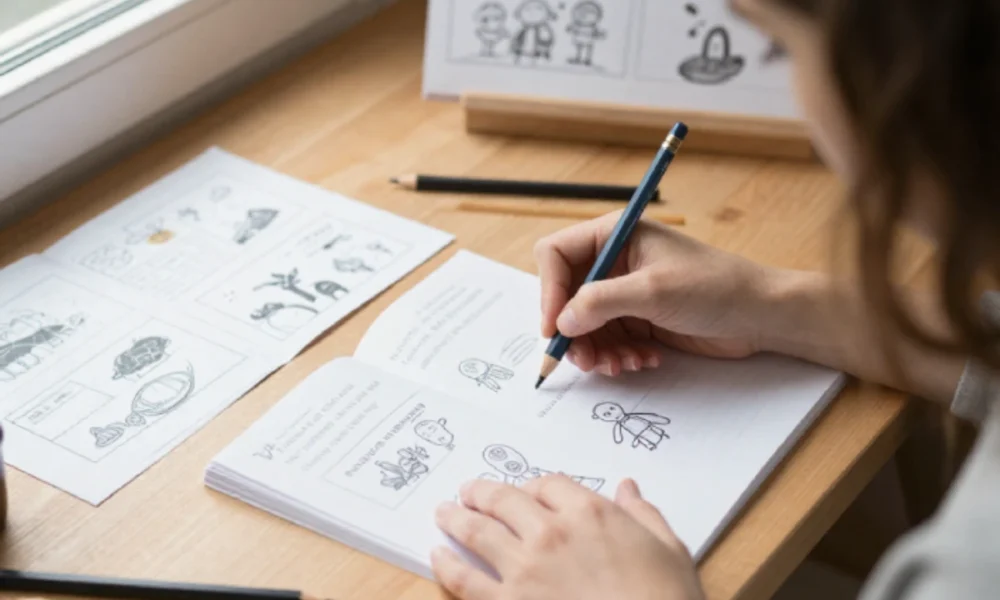
Writing a children’s book manuscript takes more than a good story idea. It requires a clear understanding of your audience, careful word choices, a well-paced plot, and a polished final draft. Whether you are writing your first picture book or revising a chapter book, the tips below cover every stage of the process.
Table Of Content
- Know Your Target Age Group
- Build a Clear, Well-Paced Plot
- Create Characters Young Readers Can Connect With
- Match Language to Your Reader’s Level
- Leave Room for Illustrations
- Add Educational Value Without Being Heavy-Handed
- Format Your Manuscript to Industry Standards
- Revise Thoroughly Before Submitting
- Summary: Key Steps at a Glance
Know Your Target Age Group
The first step in writing a strong children’s book manuscript is defining exactly who you are writing for. Children at different developmental stages have very different reading needs, attention spans, and vocabulary levels.
Picture books for ages 3–8 typically run between 500 and 1,000 words. Early readers and chapter books for ages 6–10 allow longer narratives and slightly more complex vocabulary. Middle grade books for ages 8–12 can handle nuanced characters, longer story arcs, and more sophisticated themes. Writing for “all ages” is a common mistake — narrowing your target age group makes the manuscript stronger and more marketable.
Understanding your audience also shapes the themes you choose. Toddlers and early readers respond well to stories about everyday experiences — making friends, starting school, or dealing with fear. Older children can engage with more layered conflicts, as long as the characters and situations still feel genuine.
Build a Clear, Well-Paced Plot
A strong plot is the backbone of any children’s book manuscript. The structure should be straightforward: a clear beginning that introduces the main character and setting, a middle where the central problem or challenge unfolds, and an end that resolves the conflict in a satisfying way.
Keep the story goal obvious from early on. Young readers need to know what a character wants and why it matters. Introduce obstacles that raise the stakes, but avoid overcomplicating the narrative. Children’s books work best when the plot moves with purpose and the pacing allows room for both action and quieter moments.
Limiting text to no more than 3–4 lines per page is standard practice in picture books, as it leaves space for illustrations that carry part of the story. Gobook Printing For longer formats like chapter books, shorter paragraphs and sentences help maintain reading momentum.
Create Characters Young Readers Can Connect With
Relatable characters are central to successful children’s books. Kids are more likely to stay engaged with a story when a character reflects emotions and situations they recognize — fear, excitement, disappointment, curiosity.
For younger readers, characters should face straightforward emotional challenges. For older readers, characters can carry more internal conflict, but they still need to feel believable. Avoid making characters perfect or problem-free; children connect more with characters who struggle and grow.
Children often see themselves in the characters they read about, so authenticity matters more than charm. Pacific Publishings Give your main character a clear goal, a recognizable flaw, and a sense of voice that feels consistent throughout the manuscript.
Match Language to Your Reader’s Level
Language choice is one of the most important decisions in children’s writing. For picture books, use short sentences, simple vocabulary, and concrete descriptions. The text should be easy for a caregiver to read aloud and for a young child to follow.
As the target age increases, sentence structure and vocabulary can grow more complex — but clarity should never be sacrificed. Reading your manuscript aloud, more slowly than feels natural, helps identify sections where the language becomes too dense or the pacing stalls. Reedsy
Dialogue should also reflect the characters’ ages. A six-year-old and a twelve-year-old speak differently, and matching their dialogue to their developmental stage makes the story feel more credible.
Leave Room for Illustrations
In picture books and early readers, illustrations carry a significant portion of the storytelling. The text and images work together, which means the manuscript should not over-describe what an illustration will show.
Avoid over-describing visual elements that pictures will handle — leave space for illustrations to tell part of the story. Pacific Publishings If you are not illustrating the book yourself, keep illustration notes minimal. Art directions should only be included if you are illustrating your own book; otherwise, your words need to stand on their own and evoke strong images without prompting. Dummies
When working with a professional illustrator, share the tone and emotional beats of each scene rather than dictating specific images. Illustrators bring their own interpretation, which often strengthens the final result.
Add Educational Value Without Being Heavy-Handed
Children’s books can teach without lecturing. The most effective approach is to weave lessons into the story naturally — through character decisions, consequences, and relationships — rather than stating them directly.
If your story involves animals, nature, history, or a specific skill, small accurate details can make the narrative more interesting and informative. A story about ocean creatures can include factual details about real species. A book about a child starting school can reflect genuine social dynamics. The goal is to spark curiosity and encourage further exploration, not to turn the story into a lesson plan.
Themes like kindness, resilience, and cooperation are perennial in children’s literature because they reflect real challenges children face. Handled with subtlety, these themes add depth without making the manuscript feel didactic.
Format Your Manuscript to Industry Standards
Before submitting a children’s book manuscript to a literary agent or publisher, formatting it correctly signals professionalism and helps editors assess your work quickly.
A standard cover page should include the book title, your name or pen name, contact information, intended age group, and word count. Karencioffiwritingforchildren Use 12-point Times New Roman or Arial font, double-spaced, on standard letter-size paper (8.5″ x 11″ for North America). Dummies Headers should include your last name, a shortened title, and the page number.
Save and submit your manuscript as a .docx or .pdf file, and name it clearly — a format like “Lastname_TITLE” is widely accepted. LitReactor Always check individual publisher or agent submission guidelines before sending, as requirements vary.
Revise Thoroughly Before Submitting
A completed first draft is a starting point, not a finished manuscript. Revision is where most of the real work happens.
After completing your draft, step away from it for a few days before reviewing. When you return, read the manuscript aloud from beginning to end. Listen for awkward phrasing, unclear transitions, and any passages where the story loses momentum. Check that the language stays consistent with your target age group throughout.
Reading aloud is especially important for children’s books, since they are often read aloud by parents, teachers, and caregivers. Karencioffiwritingforchildren Beyond self-editing, having a critique partner, a writing group, or a professional children’s book editor review the manuscript can surface issues that are easy to miss after repeated readings.
Correct grammar, punctuation, and spelling before submission. A clean manuscript reflects care for the work and makes a better impression on agents and editors who review large volumes of submissions.
Summary: Key Steps at a Glance
| Stage | Key Focus |
|---|---|
| Audience | Define target age group before writing |
| Plot | Clear beginning, middle, and end |
| Characters | Relatable, authentic, goal-driven |
| Language | Age-appropriate vocabulary and dialogue |
| Illustrations | Leave visual space; minimize art notes |
| Educational value | Weave themes naturally into the story |
| Formatting | Standard fonts, cover page, word count |
| Revision | Read aloud, get feedback, proofread |
Writing a children’s book manuscript is a process that rewards patience and attention to craft. Defining your audience early, building a purposeful plot, choosing the right language, and revising carefully are the steps that separate a polished manuscript from a rough draft.