

Lithium Solar Batteries: Complete 2026 Guide to Costs, Lifespan & ROI
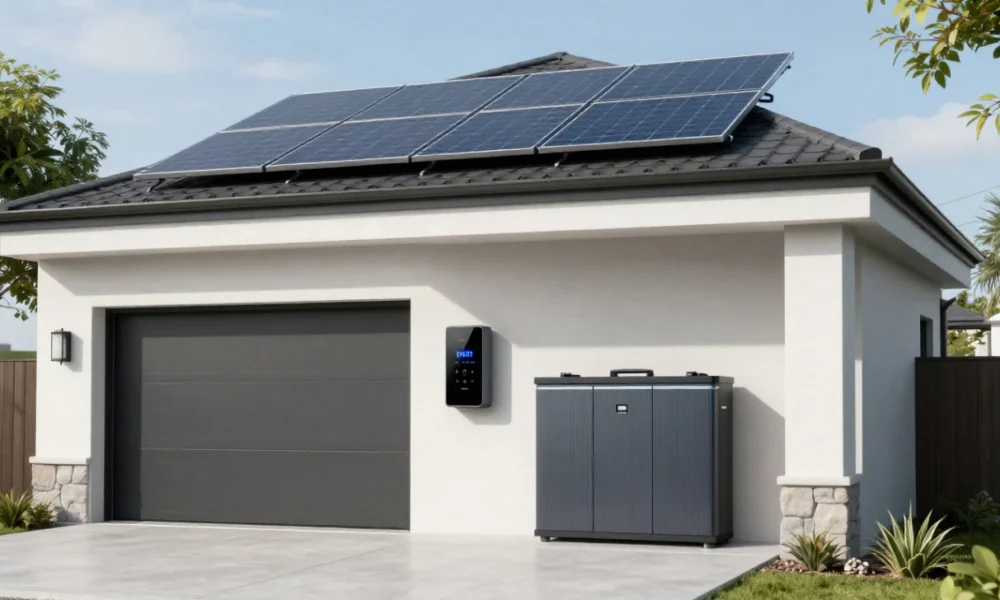
The solar battery market is expanding rapidly, with projections estimating growth from $5.5 billion in 2025 to $22.4 billion by 2035. For homeowners considering energy storage, lithium-ion technology has become the dominant choice. However, the decision involves balancing higher upfront costs against long-term performance, reliability, and environmental considerations.
Table Of Content
- Understanding Today’s Lithium Solar Batteries
- Ithium vs. Lead-Acid: A Detailed Comparison
- The Financial Case: Upfront Cost vs. Long-Term Value
- Environmental Impact and End-of-Life Considerations
- Reliability and Performance During Outages
- Addressing Safety and Supply Chain Realities
- The Future of Solar Storage
- Conclusion: Making an Informed Choice for 2026
This guide provides a detailed, current analysis of lithium solar batteries, comparing them directly with alternatives like lead-acid and emerging sodium-ion technologies. The focus remains on helping you determine the best fit for your home based on verified data and real-world application, not marketing claims.
Understanding Today’s Lithium Solar Batteries
Lithium solar batteries store energy generated from solar panels for later use, primarily during evening hours or grid outages. While the concept is straightforward, the technology differs significantly from traditional battery options in ways that affect daily performance and long-term value.
Most modern residential systems use Lithium Iron Phosphate (LFP or LiFePO₄) chemistry. This variant is preferred for home storage due to its safety profile, long cycle life, and maintenance-free operation. Unlike older lithium-ion chemistries used in consumer electronics, LFP batteries are highly stable and have a very low risk of thermal runaway.
Key Performance Metrics Explained
To evaluate any solar battery, it helps to understand three critical specifications:
- Depth of Discharge (DoD): This indicates the percentage of a battery’s energy that can be used without harming its lifespan. Most lithium batteries offer a usable capacity of 80-95%, meaning you can safely use most of the stored energy. In contrast, lead-acid batteries are typically limited to around 50% DoD to avoid significant damage .
- Round-Trip Efficiency (RTE): This measures the amount of energy that can be retrieved compared to the energy used to charge it. Lithium batteries boast high efficiency, often between 90-95%. Lead-acid systems are less efficient, typically operating at 70-80% . Higher efficiency means more of your solar-generated electricity is available for your home.
- Cycle Life: This refers to the number of charge and discharge cycles a battery can perform before its capacity degrades to a point where it needs replacement. Quality lithium batteries are rated for 4,000 to over 6,000 cycles, translating to 10-15 years of daily use. Standard lead-acid batteries last for 500 to 1,000 cycles, or about 3-5 years .
Ithium vs. Lead-Acid: A Detailed Comparison
For decades, lead-acid batteries were the primary option for energy storage. However, for daily-cycled residential solar systems, lithium-ion has decisively surpassed it in overall value . The table below summarizes the key differences.
| Feature | Lithium-Ion (LFP) | Lead-Acid (Gel/AGM) |
|---|---|---|
| Usable Capacity (DoD) | 80-95% | ~50% |
| Round-Trip Efficiency | 90-95% | 70-80% |
| Typical Cycle Life | 4,000 – 6,000+ cycles | 500 – 1,000 cycles |
| Lifespan (Estimate) | 10 – 15 years | 3 – 5 years |
| Maintenance | None | Regular checks, watering (for flooded types) |
| Key Trade-off | Higher upfront cost | Lower initial investment, higher long-term cost |
| Best For | Daily cycling, maximizing solar use, long-term ownership | Occasional backup use, very tight budgets |
Sources:
The Financial Case: Upfront Cost vs. Long-Term Value
The most common point of hesitation is the initial price. A lithium solar battery system costs significantly more upfront than a lead-acid bank of comparable nameplate size. However, focusing solely on the sticker price overlooks the total cost of ownership (TCO), which provides a more accurate financial picture.
Calculating Total Cost of Ownership
TCO considers the initial purchase, the number of replacements needed over a project’s lifetime, maintenance, and performance losses. For a 10-10 yearshium batteries often prove to be the more economical choice.
Consider a scenario where a home requires a system to deliver a certain amount of energy daily :
- A lead-acid solution would require a larger installed capacity (due to the 50% DoD limit and lower efficiency), need replacement every 3-5 years, and incur higher maintenance costs.
- A lithium solution can be smaller, operates for 10+ years without replacement, and has no maintenance costs.
While the numbers vary based on location, usage patterns, and specific products, analyses consistently show that for daily-cycled applications, lithium provides a lower cost per kilowatt-hour over its lifetime. The economic advantage is even greater in regions with high electricity rates or frequent outages, where reliable backup and energy bill savings compound faster.
Federal Tax Credits and Incentives
The financial equation is further improved by government incentives. The federal solar tax credit (Investment Tax Credit or ITC) allows you to deduct a percentage of the cost of installing a solar energy system, including battery storage, from your federal taxes. To qualify, the battery must be charged by an associated solar panel system. Check the latest guidelines, as the credit percentage and requirements are subject to scheduled step-downs and legislative updates [citation: original article].
Environmental Impact and End-of-Life Considerations
While lithium batteries enable cleaner energy use, their production and disposal carry environmental footprints. A transparent assessment requires looking at the full lifecycle.
The “Green” Battery Paradox
The manufacturing of any battery is energy-intensive. Lithium-ion production involves mining raw materials like lithium, cobalt, and nickel. However, compared to lead-acid, the environmental burden over the battery’s useful life is often lower. A life-cycle assessment study in Burkina Faso found that lead-acid PV systems had significantly higher environmental impacts—over 10 times higher for human carcinogenic toxicity and 5 times higher for non-carcinogenic toxicity—compared to lithium-ion systems.
The key differentiator is recycling. The same study showed that recycling can drastically cut the environmental impacts of both battery types. For lithium-ion, recycling reduced impacts by 3-99% across various categories. The industry is moving toward designing for circularity. For example, researchers have demonstrated methods to recover over 99% of materials from perovskite solar cells using water-based processes, pointing toward a future where battery components are designed to be unmade as easily as they are made .
Addressing Lead Concerns in Alternatives
For lead-acid batteries, the environmental and health hazards are more pronounced. They contain toxic lead and sulfuric acid. If not properly recycled—which they often are not in many parts of the world—they can cause significant soil and water contamination . This makes the shift to lithium, with its cleaner end-of-life profile (especially with emerging recycling tech), an environmentally sound choice, provided the systems are channeled into proper recycling streams at end-of-life.
Reliability and Performance During Outages
For many homeowners, the primary motivation for a solar battery is backup power during grid failures. Here, lithium offers distinct practical advantages.
Faster Response and Higher Usable Energy
Lithium batteries recharge faster than lead-acid, meaning they can capture more energy during limited daylight hours after an outage . Their high DoD ensures you can run appliances for longer without depleting the battery to harmful levels. Furthermore, lithium batteries perform more consistently in a wider range of temperatures, though extreme heat or cold can still affect performance. Newer sodium-ion batteries are emerging with even better cold-weather performance, maintaining 90% capacity at -40°C, which could be a future alternative for northern climates .
Sizing for Your Needs
Proper sizing is crucial for reliability. The goal is to match the battery’s capacity to your essential loads and desired backup duration. A practical approach involves calculating your daily essential energy needs (e.g., keeping lights, refrigerator, and internet running) and multiplying by the number of days of autonomy you want . A reputable installer will perform this analysis, factoring in the surge power required to start appliances like well pumps and air conditioners.
Addressing Safety and Supply Chain Realities
No discussion of lithium batteries is complete without acknowledging legitimate safety and supply chain concerns.
Fire Safety and Thermal Runaway
While the risk is low, lithium-ion batteries can experience thermal runaway, a condition where increasing temperature causes a reaction that further increases temperature, potentially leading to fire. This is a greater concern for some chemistries (like Nickel Manganese Cobalt) and in large-scale utility installations, where high-profile incidents have occurred. However, modern residential LFP batteries are chemically much more stable and resistant to this phenomenon. Proper installation by certified professionals, adherence to building codes, and integrated Battery Management Systems (BMS) mitigate these risks effectively for homeowners.
Supply Chain and Domestic Content
The battery supply chain is heavily concentrated. For example, China controls a significant portion of global processing for materials like graphite. This has implications for pricing and availability. In the US, recent policies like the Inflation Reduction Act (IRA) are creating incentives for domestic manufacturing and sourcing. This could lead to more choices and potentially lower costs for domestically assembled battery systems in the coming years, but it also introduces complexity regarding tax credit eligibility for systems using foreign-made components .
The Future of Solar Storage
Lithium-ion is currently the market leader, but it’s not the only option on the horizon.
- Sodium-Ion Batteries: As mentioned, sodium-ion is emerging as a strong contender, especially for applications where cold-weather performance and abundant raw materials (sodium is far more common than lithium) are advantages. It’s expected to compete directly with LFP in the short-to-medium duration market .
- Integrated Solar Batteries: Researchers are actively developing fully integrated systems that combine solar harvesting and storage into a single device, using materials like perovskites. This could dramatically reduce system complexity and cost in the long term, though it remains in the research and development phase for now.
Conclusion: Making an Informed Choice for 2026
For the vast majority of homeowners investing in a solar-plus-storage system today, lithium solar batteries represent the most reliable, efficient, and cost-effective solution over the system’s lifetime.
The higher initial cost is typically offset by the longer lifespan, greater usable capacity, higher efficiency, and lower maintenance. When evaluating options, look beyond the upfront price and compare the total cost of ownership. Verify safety certifications (like UL 9540 for the complete system), understand the warranty terms, and work with a qualified installer who can properly size the system for your specific household loads and goals.
While alternatives like sodium-ion are on the horizon, lithium-ion technology, particularly LFP, is mature, widely available, and supported by a growing ecosystem for recycling and second-life applications, making it a sound investment for energy independence.