

Top 10 Most Popular Foods in America: A Guide to Iconic Dishes
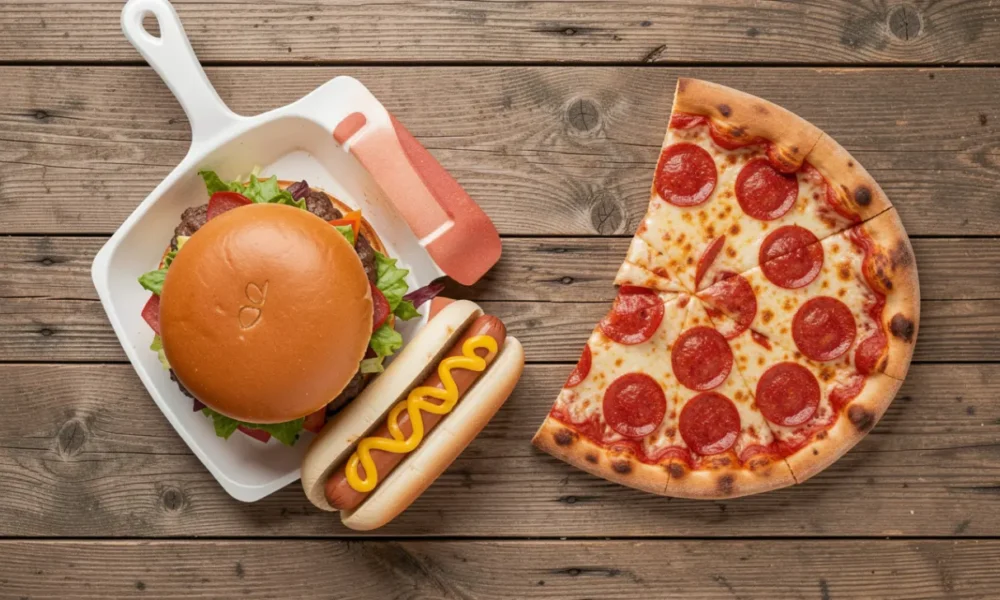
American cuisine is a diverse landscape of flavors, shaped by centuries of immigration and regional innovation. Its dishes have gained recognition far beyond US borders, but what makes this food culture so distinctive and beloved? This article explores the roots of American food and counts down the top 10 most popular foods in America, revealing the historical traits that have earned them a lasting place at the table.
Table Of Content
- Introduction: A Melting Pot of Flavors
- 1. Hot Dogs: America’s Favorite Ballpark Snack
- 2. French Fries: The Ultimate Side Dish
- 3. Chicken Tenders: A Crispy Comfort Food
- 4. Pizza: A Slice of Italian-American History
- 5. Burgers: A Classic American Icon
- 6. Apple Pie: As American as… Apple Pie
- 7. Meatloaf: A Hearty Comfort Food
- 8. Macaroni and Cheese: The Ultimate Comfort Combo
- 9. Grilled Cheese Sandwiches: Ooey, Gooey, and Delicious
- 10. Chocolate Chip Cookies: A Sweet Icon
- Concluion
Introduction: A Melting Pot of Flavors
American cuisine is not a single tradition but a fusion of many. Its evolution began with Native American agricultural practices, such as the cultivation of maize, beans, and squash, and the cooking methods of early indigenous peoples. Subsequent waves of immigration from Europe, Africa, Asia, and Latin America introduced new ingredients, techniques, and dishes, which were often adapted to local tastes and resources. This process of continuous adaptation has created a rich and varied food culture, from regional specialties like Tex-Mex and Louisiana Creole to the global phenomenon of American fast food. The following list explores the iconic dishes that have come to define this culinary landscape.
1. Hot Dogs: America’s Favorite Ballpark Snack
The hot dog is synonymous with American casual dining. It consists of a cooked sausage, typically beef or a combination of beef and pork, served in a soft, elongated bun.
Why It’s a Classic Hot dogs are a symbol of convenience and summer recreation. They are a staple at backyard barbecues, sporting events, and street carts from coast to coast. Their enduring popularity lies in their simplicity and the nostalgia they evoke.
History & Context The hot dog’s origins trace back to German immigrants who brought frankfurters and wieners to the United States in the 19th century. The term “hot dog” is believed to have emerged in the early 1900s. The dish became iconic at Coney Island, New York, when German immigrant Charles Feltman began selling sausages in buns from a cart in 1871 .In1916, a former employee, Nathan Handwerker, opened Nathan’s Famous, revolutionizing the food with an all-beef, kosher-style recipe and cementing its place in American culture. The Nathan’s Famous Fourth of July International Hot Dog Eating Contest remains a nationally recognized tradition.
Consumption Statistics: Americans consume an enormous number of hot dogs each year, particularly during the summer. Between Memorial Day and Labor Day, over 7 billion hot dogs are typically consumed. On Independence Day alone, Americans consume an estimated 150 million hot dogs
2. French Fries: The Ultimate Side Dish
French fries, thin strips of potato deep-fried to a crispy golden brown, are the most popular side dish in the United States, served alongside burgers, sandwiches, and countless other meals.
Why They’re a Staple The appeal of French fries lies in their texturecrispy on the outside and fluffy on the insideand their versatility as a vehicle for various condiments, from classic ketchup to mayonnaise, ranch dressing, or malt vinegar.
History & Context The origin of French fries is debated between France and Belgium, though Belgian historian Pierre Leclercq posits that they were born on the streets of 19th-century Paris as a portable snack. The term “French” may refer to the culinary technique of “Frenching,” or cutting into thin strips. Thomas Jefferson is often credited with introducing the dish to America, reportedly serving “potatoes served in the French manner” at a White House dinner in 1802.
Consumption Statistics Americans are second only to Belgians in per capita fry consumption, with the average American eating about 13 kilograms (roughly 28.6 pounds) of fries per year.
3. Chicken Tenders: A Crispy Comfort Food
Chicken tenders, also known as chicken fingers or strips, are breaded and deep-fried pieces of chicken breast. They are a menu staple for both children and adults, prized for their tenderness and mild flavor.
Why They’re a Favorite: They represent the pinnacle of approachable comfort food. Their mild taste and juicy interior, encased in a crispy coating, make them endlessly customizable with a wide range of dipping sauces. Their popularity has fueled the growth of entire restaurant chains.
History & Context The modern chicken tender is a relatively recent invention, celebrating its 50th anniversary in 2024. It is believed to have originated in Manchester, New Hampshire, around 1974. The term refers specifically to the tenderloin, a strip of muscle attached to the underside of the breast that is exceptionally tender due to its lack of exercise. This innovation provided a way to utilize and highlight this specific cut of meat.
4. Pizza: A Slice of Italian-American History
Pizza, a baked flatbread typically topped with tomato sauce, cheese, and various toppings, has been so thoroughly embraced and adapted in the United States that it has become an integral part of the national cuisine.
Why It’s an Icon Pizza is the ultimate customizable meal, suitable for a quick lunch, a casual dinner, or social gatherings. Its versatilityfrom the thin crust of New York to the deep-dish of Chicagohas allowed it to maintain widespread appeal across different regions.
History & Context While pizza has ancient roots in Italy, its American journey began in earnest with the opening of the first pizzeria in the United States, Lombardi’s, in New York City in 1905. His adaptation of the Neapolitan pizza laid the groundwork for what would become New York-style pizza. The introduction of frozen pizza in the 1950s further cemented its role as a national convenience food .
Global Impact Americans are the world’s largest per capita consumers of pizza, eating an average of 13 kilograms (about 28.6 pounds) per person each year. Globally, pepperoni remains one of the most popular topping choices
5. Burgers: A Classic American Icon
The hamburger is perhaps the most globally recognized symbol of American food. A classic version consists of a ground beef patty placed inside a sliced bun, often adorned with lettuce, tomato, onion, pickles, and condiments.
Why It’s an Icon The burger’s appeal lies in its hearty, satisfying nature and its infinite capacity for customization. It spans the culinary spectrum, from fast-food value menus to gourmet restaurant creations featuring high-quality beef and artisanal toppings.
History & Context The hamburger’s origins are complex, with ties to German migrants who brought dishes like “frikadellen” to the United States in the mid-1800s.It evolved into a sandwich format and became a staple of American dining. White Castle, founded in 1921, is credited with pioneering the fast-food hamburger chain, introducing the concept of a small, square patty served on a soft bun andd establishing the model for the industry.
Consumption Statistics Burger consumption in the U.S. is staggering. More than 50 billion burgers are consumed annually, which averages out to about three burgers per week for every American
6. Apple Pie: As American as… Apple Pie
Apple pie is a dessert consisting of a pastry crust filled with sliced apples, sugar, and spices like cinnamon and nutmeg. Its cultural significance is so profound that it is embedded in the common phrase “as American as apple pie.”
Why It’s Beloved T: he dish embodies the warmth and nostalgia of home baking. The combination of sweet, spiced apples and a flaky, buttery crust creates a comforting sensory experience strongly associated with family gatherings, holidays, and traditional American values.
History & Context Despite its patriotic status, apple pie was introduced to the American colonies by European settlers, who adapted their traditional recipes to local ingredients. Pies were a practical way for early colonists to preserve food, and the term “crust” replaced the earlier, less appetizing term “coffin” during the American Revolution. Over centuries, it transitioned from a preserved meat dish to the celebrated dessert known today. Apple consistently ranks as the most popular pie in America.
7. Meatloaf: A Hearty Comfort Food
Meatloaf is a classic dish of ground meat (usually beef or a mix of beef and pork) combined with other ingredients like breadcrumbs, eggs, and seasonings, formed into a loaf shape and baked. It is often topped with a tangy tomato-based glaze.
Why It’s a Favorite Meatloaf is the epitome of economical, home-style cooking. It is a versatile, one-dish meal that can feed a family using simple, affordable ingredients. Its ability to be adapted with different meats, spices, and mix-ins has kept it relevant for generations.
History & Context While recipes for minced meat dishes date back to ancient Rome, the meatloaf known today became popular in the United States during the late 19th century. Its widespread adoption as a comfort food staple, however, is directly linked to the Great Depression. During this era of scarcity, families needed to stretch their meat supply. The use of fillers like breadcrumbs and oats became common, and the addition of ingredients like ketchup helped add flavor and moisture to economical meals. The meat grinder became a common kitchen tool, allowing families to use cheaper cuts and scraps.
8. Macaroni and Cheese: The Ultimate Comfort Combo
Macaroni and cheese, or “mac and cheese,” is a dish of cooked macaroni pasta and a creamy cheese sauce. It can be prepared on the stovetop or baked as a casserole.
Why It’s So Popular: It is the ultimate comfort food, combining carbohydrates and rich, cheesy sauce into a universally appealing dish. It can be a simple homemade meal, an upscale side dish, or a nostalgic staple from an iconic blue box. A 2025 survey found that 56% of Americans would give up coffee or social media before they would give up mac and cheese.
History & Context The pairing of pasta and cheese has ancient origins, with a recipe appearing in a 13th-century Italian cookbook. The familiar baked version made its way to the United States in the late 18th century, introduced by James Hemings, Thomas Jefferson’s Paris-trained chef. For decades, it was considered a luxury or a Southern delicacy . he dish was revolutionized in 1937 when Kraft introduced its boxed version during the Great Depression. Priced at 19 cents, it was an affordable meal, and Kraft sold 9 million boxes in its first year. Today, Kraft still sells over a million boxes of macaroni and cheese daily in the U.S. .
9. Grilled Cheese Sandwiches: Ooey, Gooey, and Delicious
The grilled cheese sandwich is a simple preparation of melted cheese between two slices of buttered and toasted bread. It is a cornerstone of American casual dining.
Why It’s an Icon Its popularity stems from its simplicity, speed, and comforting flavor. The contrast between the crispy, buttery exterior and the warm, melted cheese interior is a sensory delight. It is a versatile canvas for additions like tomato, bacon, or different cheeses, and its classic pairing with tomato soup is a defining comfort food combination.
History & Context While bread and cheese have been combined for centuries, the grilled cheese sandwich became popularized in the United States during the Great Depression. It was an economical way to use affordable ingredients like bread and cheese to create a hot, satisfying meal. Its ease of preparation made it a lasting favorite for quick lunches and simple dinners.
10. Chocolate Chip Cookies: A Sweet Icon
The chocolate chip cookie is a drop cookie featuring chocolate chips as a distinguishing ingredient. It is the most popular cookie in America and a symbol of home baking.
Why It’s a Classic The combination of a soft, buttery, slightly chewy cookie with semi-sweet chocolate chips is irresistible. The cookie is strongly associated with childhood, baking with family, and the welcoming aroma of a freshly baked treat. It is a staple of bake sales, lunchboxes, and late-night snacks.
History & Context The chocolate chip cookie was invented in 1938 by Ruth Graves Wakefield at the Toll House Inn in Whitman, Massachusetts. The popular story is that she ran out of baker’s chocolate and substituted broken pieces of semi-sweet chocolate, expecting them to melt. Instead, they held their shape, creating the first chocolate chip cookie. Her recipe became incredibly popular, and in 1939, Nestlé introduced Toll House chocolate chips, printing her recipe on the package and cementing the cookie’s place in American culinary history.
Concluion
The most popular foods in America tell the story of the nation itself: a blend of immigrant traditions, regional resources, and economic forces that have shaped how people eat. From the ancient Roman roots of macaroni and cheese to the 20th-century invention of the chocolate chip cookie, each dish carries a unique history . This culinary landscape continues to evolve, building upon classic, time-honored dishes while embracing new influences. So, the next time you enjoy a slice of pizza or a bite of a juicy burger, you are partaking in a rich and diverse culinary heritage.