

How to Choose the Right Stone Cone Crusher Supplier for Your Quarry Operation
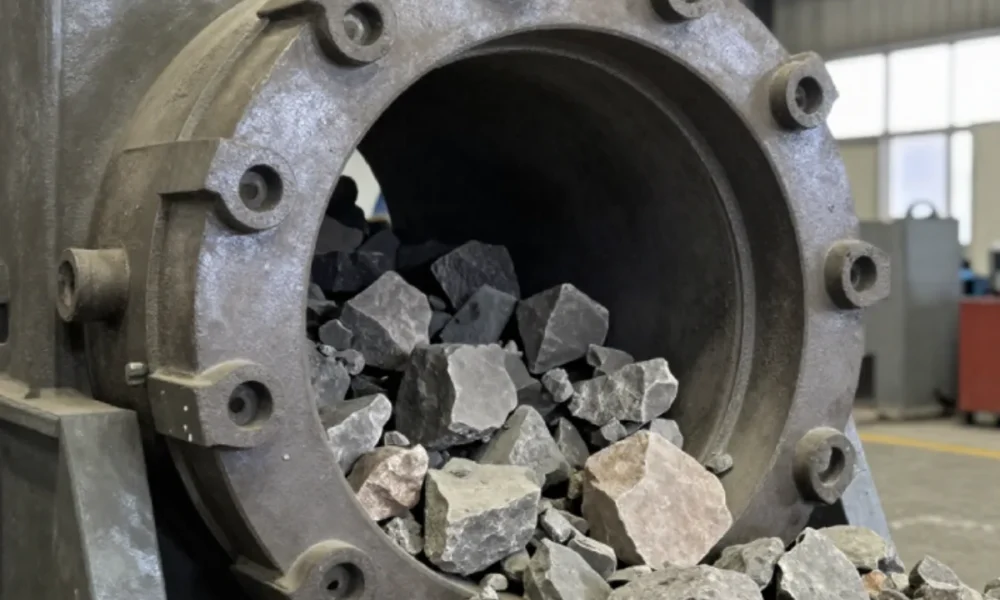
How to Choose the Right Stone Cone Crusher Supplier for Your Quarry Operation. Quarrying and mining operations depend heavily on reliable crushing equipment. Among available crusher types, stone cone crushers are widely preferred for secondary, tertiary, and quaternary crushing stages due to their high throughput capacity, consistent product gradation, and ability to handle hard, abrasive materials under continuous load. Selecting the wrong supplier, however, can compromise machine performance, increase downtime, and raise operating costs over the life of the equipment.
Table Of Content
- What a Stone Cone Crusher Does in a Quarry Circuit
- Why Supplier Selection Affects Long-Term Performance
- Evaluating Supplier Reputation and Track Record
- Assessing Machine Quality and Engineering Standards
- Technology and Configuration Options
- Customization for Specific Quarry Requirements
- After-Sales Support and Parts Availability
- Total Cost of Ownership vs. Purchase Price
- Key Takeaways for Sourcing from a Quarry Stone Crusher Factory
This guide covers the key factors to assess when sourcing a stone cone crusher from a quarry stone crusher factory or equipment manufacturer.
What a Stone Cone Crusher Does in a Quarry Circuit
Stone cone crushers are compression-type machines placed after a primary jaw crusher in a crushing circuit. They reduce material by squeezing it between a fixed outer liner—called the bowl liner or concave—and a moving inner component called the mantle. As the mantle gyrates, material is continuously compressed and broken down to a controlled output size.
This mechanism makes cone crushers well-suited for producing uniformly shaped aggregates within tight particle size specifications, which is a requirement in road base construction, concrete production, and rail ballast applications. Cone crushers are also available in single-cylinder hydraulic and multi-cylinder hydraulic configurations, with each suited to different feed sizes and production volumes.
Why Supplier Selection Affects Long-Term Performance
The supplier directly determines the metallurgical quality of wear components, the availability of spare parts, and the level of technical support accessible once the machine is in the field. A quarry stone crusher factory that experiences frequent liner failures, hydraulic system faults, or unplanned shutdowns due to poor parts supply will face significantly higher cost per ton than one running equipment from a well-supported source.
Reputable manufacturers such as Metso, with its Nordberg GP, HP, and MP Series, or Superior Industries with its Patriot Cone Crusher, invest in component engineering standards that directly affect crusher uptime and output consistency. While these are established benchmarks, a range of global manufacturers also produce reliable equipment at varying price points—the key is verifying the standard of manufacturing and support before committing.
Evaluating Supplier Reputation and Track Record
A supplier’s track record is the most reliable signal of what to expect post-purchase. Before shortlisting any source, review the following:
- Customer references from comparable operations — seek out quarry operators running similar material types and production volumes who have used the supplier’s equipment for at least two to three years.
- Case studies demonstrating real-world performance — throughput figures, liner wear life, and maintenance intervals are more useful than specification sheets.
- Years of operation in the crushing equipment market — suppliers with sustained market presence typically have more developed spare parts networks and service infrastructure.
Avoid relying solely on marketing materials. Request verifiable data on machine performance in field conditions similar to your own quarry.
Assessing Machine Quality and Engineering Standards
Not all cone crushers built to similar specifications perform equally in the field. The quality of the crusher depends on the steel grades used in the frame and wear components, the precision of the crushing chamber geometry, bearing quality, and the standard of hydraulic systems.
Key questions to ask any potential supplier:
- What steel grade and heat treatment process is used for the mantle and bowl liner?
- What is the rated crushing force and how does the hydraulic relief system protect against tramp iron or uncrushable material?
- Does the crusher include an automated setting adjustment system for real-time output control?
- What are the documented wear life benchmarks for liners when processing granite, basalt, or limestone?
Features such as hydraulic CSS (closed-side setting) adjustment, tramp release systems, and wear-resistant manganese steel liners significantly affect maintenance frequency and component replacement costs.
Technology and Configuration Options
Stone cone crushers are available in several configurations, each suited to specific applications:
Suppliers offering a range of configurations allow quarry operators to match the machine to the actual crushing stage rather than adapt operations around a fixed product. Output capacity for cone crushers generally ranges from approximately 36 to over 2,000 tonnes per hour depending on model and configuration—verify that the supplier’s available models align with your production targets.
Customization for Specific Quarry Requirements
Every quarry circuit has different feed characteristics, product size targets, and space constraints. A supplier capable of offering configuration adjustments—such as different liner profiles for coarse, medium, or fine crushing, alternative motor specifications, or modified feed arrangements—is significantly more useful than one offering a fixed product range only.
Customization may also extend to the crushing chamber geometry. Different cavity types (coarse, medium, fine, extra-fine) are designed to handle specific feed sizes and produce specific product gradations. Confirm that the supplier can match the chamber design to your feed material and target output before purchase.
After-Sales Support and Parts Availability
After-sales support is a major differentiator between suppliers and one of the most practical factors in total cost of ownership for a quarry stone crusher. The ability to source genuine wear parts and replacement components quickly determines how long a machine sits idle following routine maintenance or an unplanned breakdown.
Evaluate the following before selecting a supplier:
- Parts inventory depth — does the supplier stock critical wear items including mantles, bowl liners, and eccentric bushings locally or regionally?
- Response time for technical support — some suppliers offer 24-hour response or on-site service commitments.
- Availability of operator and maintenance training — well-trained site staff reduce misoperation and extend component life.
- Warranty terms — standard warranties in the industry typically cover two years or 6,000 operating hours; confirm what is included and excluded.
Suppliers that treat after-sales as a separate service rather than integrating it into the overall supply relationship tend to perform poorly when machines require urgent support.
Total Cost of Ownership vs. Purchase Price
Purchase price is one input in a larger financial calculation. A lower-priced machine that requires more frequent liner changes, has a shorter service interval, or comes with limited parts support will often cost more over three to five years than a higher-priced machine with better component life and support infrastructure.
When comparing suppliers, calculate total cost of ownership by estimating:
- Expected liner wear life based on material hardness (measured in Bond Work Index or abrasion index)
- Frequency and cost of scheduled maintenance
- Estimated downtime cost per hour and the supplier’s historical parts lead times
- Cost of training and commissioning support
This approach allows a meaningful comparison between suppliers rather than a price-only decision that may prove costly once the equipment is operational.
Key Takeaways for Sourcing from a Quarry Stone Crusher Factory
Selecting a stone cone crusher supplier requires assessing reputation, machine engineering quality, configuration options, and after-sales infrastructure—not price alone. Suppliers with verified field performance data, configurable product ranges, and well-stocked parts networks provide a measurably lower operating risk than those offering competitive pricing without supporting evidence of long-term performance.
Whether sourcing for a new installation or replacing existing equipment, applying a structured evaluation process will help ensure the machine purchased can meet production targets reliably and cost-effectively over its operational life.